Today's
EarthStation1.com 15% Off Commemorative Memorial Title: Rock &
Roll An Unruly History 10 Part TV Series MP4 Video Download DVD
Today, February 3, 2026
February 3: National The Day The Music
Died: -- February 3, 1959: #DOTD: #RIP: Rock and roll musicians
Buddy Holly (b. September 7, 1936), Ritchie Valens (b. May 13,
1941) and J. P. "The Big Bopper" Richardson #dies when
they were killed in a plane crash near Clear Lake, Iowa, together
with pilot Roger Peterson. The event later became known as "The
Day the Music Died", after singer-songwriter Don McLean
referred to it as such in his song "American Pie" in
1971. At the time, Holly and his band, consisting of Waylon
Jennings, Tommy Allsup, and Carl Bunch, were playing on the
"Winter Dance Party" tour across the United States
Midwest. Rising artists Valens and Richardson had joined the tour,
as well. The long journeys between venues on board the cold,
uncomfortable tour buses adversely affected the performers, with
cases of flu and even frostbite. After stopping at Clear Lake to
perform, and frustrated by such conditions, Holly chose to charter
a plane to reach their next venue in Moorhead, Minnesota.
Richardson, who had the flu, swapped places with Jennings, taking
his seat on the plane, while Allsup lost his seat to Valens on a
coin toss. Soon after takeoff, late at night and in poor, wintry
weather conditions, the pilot lost control of the light aircraft,
a Beechcraft Bonanza, which subsequently crashed into a cornfield.
Everyone on board was killed. The event has since been mentioned
in various songs and films. A number of monuments have been
erected at the crash site and in Clear Lake, where an annual
memorial concert is also held at the Surf Ballroom, the venue that
hosted the artists' last performance. ========= Buddy Holly,
American singer-songwriter and guitarist who was a central and
pioneering figure of mid-1950s rock and roll (d. February 3, 1959)
was born Charles Hardin Holley in Lubbock, Texas, to a musical
family during the Great Depression, and learned to play guitar and
sing alongside his siblings. His style was influenced by gospel
music, country music, and rhythm and blues acts, which he
performed in Lubbock with his friends from high school. He made
his first appearance on local television in 1952, and the
following year he formed the group "Buddy and Bob" with
his friend Bob Montgomery. In 1955, after opening for Elvis
Presley, he decided to pursue a career in music. He opened for
Presley three times that year; his band's style shifted from
country and western to entirely rock and roll. In October that
year, when he opened for Bill Haley & His Comets, he was
spotted by Nashville scout Eddie Crandall, who helped him get a
contract with Decca Records. Holly's recording sessions at Decca
were produced by Owen Bradley, who had become famous for producing
orchestrated country hits for stars like Patsy Cline. Unhappy with
Bradley's musical style and control in the studio, Holly went to
producer Norman Petty in Clovis, New Mexico, and recorded a demo
of "That'll Be the Day", among other songs. Petty became
the band's manager and sent the demo to Brunswick Records, which
released it as a single credited to "The Crickets",
which became the name of Holly's band. In September 1957, as the
band toured, "That'll Be the Day" topped the US and UK
singles charts. Its success was followed in October by another
major hit, "Peggy Sue". The album Chirping Crickets,
released in November 1957, reached number five on the UK Albums
Chart. Holly made his second appearance on The Ed Sullivan Show in
January 1958 and soon after, toured Australia and then the UK. In
early 1959, he assembled a new band, consisting of future country
music star Waylon Jennings (bass), famed session musician Tommy
Allsup (guitar), and Carl Bunch (drums), and embarked on a tour of
the midwestern U.S. After a show in Clear Lake, Iowa, he chartered
an airplane to travel to his next show, in Moorhead, Minnesota.
Soon after takeoff, the plane crashed, killing Holly, Ritchie
Valens, The Big Bopper, and pilot Roger Peterson in a tragedy
later referred to by Don McLean as "The Day the Music Died".
During his short career, Holly wrote and recorded several songs.
He is often regarded as the artist who defined the traditional
rock-and-roll lineup of two guitars, bass, and drums. He was a
major influence on later popular music artists, including Bob
Dylan, The Beatles, The Rolling Stones, Eric Clapton, and Elton
John. He was among the first artists inducted into the Rock and
Roll Hall of Fame, in 1986. Rolling Stone magazine ranked him
number 13 in its list of "100 Greatest Artists".
========= Ritchie Valens, Mexican American guitarist, singer and
songwriter, rock and roll pioneer and forefather of the Chicano
rock movement (d. February 3, 1959) was born Richard Steven
Valenzuela in Pacoima, a neighborhood in the San Fernando Valley
region of Los Angeles. Valens had several hit songs, most notably
"La Bamba", which he had adapted from a Mexican folk
song. Valens transformed the song into one with a rock rhythm and
beat, and it became a hit in 1958, making Valens a pioneer of the
Spanish-speaking rock and roll movement. The first of his four
charting singles from his self-titled debut album was the often
covered "Come On, Let's Go", and Valens also had an
American number-two hit with "Donna". ========= The Big
Bopper, American songwriter, guitarist and disc jockey (d.
February 3, 1959) was born Jiles Perry Richardson Jr. ("J.P."
Richardson) on October 24, 1930 in Sabine Pass, Texas. His
best-known compositions include "Chantilly Lace" and
"White Lightning", the latter of which became George
Jones' first number-one hit in 1959. On Sale @ 15% Off Discount
Till Midnight PT!
https://store.earthstation1.com/rock-amp-roll-an-unruly-history-10-part-tv-series-mp4-video-download-104.html
Today's
EarthStation1.com 15% Off Commemorative Memorial Title:
Television: A History Of Broadcast TV DVD MP4 Download USB Drive
Today, February 3, 2026
February 3: Elmo's Birthday: -- This day
was first celebrated by "Sesame Street," who has since
described Elmo as being three-and-a-half years old today and every
day, from his first appearance on the show in 1980. Elmo is a
beloved character in the children's series, produced by the Sesame
Workshop - a non-profit organization that produces educational
programs for kids. When Elmo was first conceived, he was only
meant to have been a supporting character. But with time and
through the hard work of many writers and puppeteers, Elmo
developed into a personality with a prominent role in the show.
Elmo's Birthday is celebrated on February 3 every year by the
Sesame Workshop who produce content on the "Sesame Street"
show. Elmo is a red puppet, referred to as a muppet whose
character appears on the educational show, "Sesame Street,"
which is one of the longest-running children's programs in the
country today. Although "Sesame Street" was created to
appeal to a wide audience, its focus was to educate children using
a set curriculum aimed at achieving educational goals.
Researchers, educators, writers, and producers all worked together
on the show that monitors the educational effects it has on its
viewers and adjusts where necessary to better suit the show's
objectives. Elmo first appeared in the 1980 "Sesame Street"
song, 'We Are Monsters.' While various puppeteers manned the
character, it was puppeteer Kevin Clash's performance that really
brought the character to life. Elmo has since become a popular
character who appears regularly on "Sesame Street" and
hosts the last 15 minutes of the show, which is aimed at toddlers.
He is ideal for this role because children that age can relate to
him since he is in their age group. Apart from this segment,
called '"Elmo's World," Elmo was a regular on "The
Rosie O'Donnell Show" too. He has toured the talk show
circuit and has made appearances on "Martha Stewart Living"
and "The View." He was the star of the full-length film,
"The Adventures of Elmo in Grouchland" and the 60-minute
musical fantasy film, "Elmo Saves Christmas." On Sale @
15% Off Discount Till Midnight PT!
https://store.earthstation1.com/television-1988-tv-documentary-series-8-shows-4-dual-laye198884.html
Today's
EarthStation1.com 15% Off Commemorative Memorial Title: American
Art & The Metropolitan Museum 1650-1914 DVD, MP4, USB Drive
Today, February 3, 2026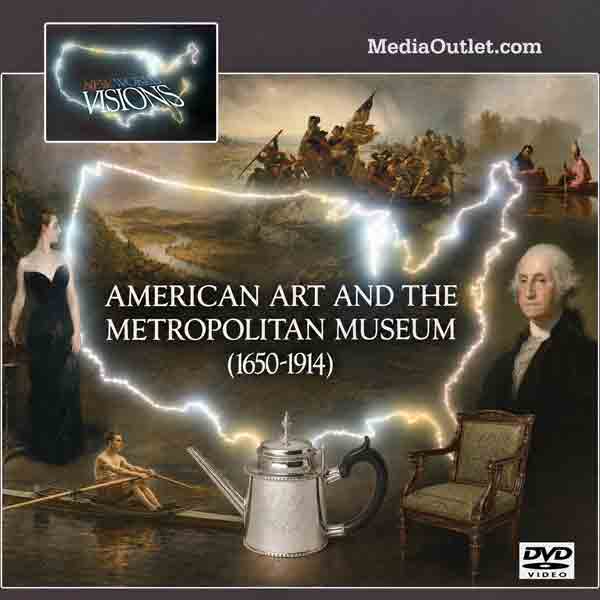
February 3: American Painters Day: --
Celebrated to bring attention to American painters and some of the
great works they have created in the past few decades. Yes,
American painters have made some great contributions to the world
of art and are also responsible for some glorious movements that
led to the evolution of paintings and their forms. Several artists
also contributed a great deal toward social movements that were
occurring during times of war. Their creations brought attention
to the atrocities committed against human beings. Therefore,
honoring those painters who changed the history of the U.S is a
must! American Painters Day pays an ode to prolific American
painters known for their astounding work in the field. However,
the day places more emphasis on the illustrator Norman Rockwell.
Rockwell gained attention for the exaggerated realism that he
depicted in his work. He became famous during the 20th century for
his covers that appeared in the weekly Saturday Evening Post.
These amounted to around 300 covers during his lifetime. The
artist also garnered attention and appreciation for commenting on
World War II with his creative illustrations. His main subject
revolved around depicting the American way of life. Rockwell is
celebrated to such a large extent because of the contributions he
made throughout his life using art. In fact, he was taking classes
at the New York School of the Arts at the age of 14. He also left
high school and enrolled at the National Academy of Design.
Developing a passion for a field at such a young age is rare and
defines how much invested an individual is toward achieving their
dream. Since Rockwell started early, he also managed to become
famous early. He has painted Christmas cards and was hired as the
art director of "Boy's Life" when he was just in his
teens. His first cover for the "Saturday Evening Post"
was painted in 1916 - Rockwell was only 22 then. Over the years,
the artist kept producing work that left the entire country in
awe. His work also gained international recognition, and once
again pushed American art to the forefront. Norman Rockwell
received the Presidential Medal of Freedom in 1977. On Sale @ 15%
Off Discount Till Midnight PT!
https://store.earthstation1.com/american-art-and-the-metropolitan-museum-165016501914.html
Today's
EarthStation1.com 15% Off Commemorative Memorial Title: Norman
Rockwell: An American Portrait DVD, Video Download, USB Drive
Today, February 3, 2026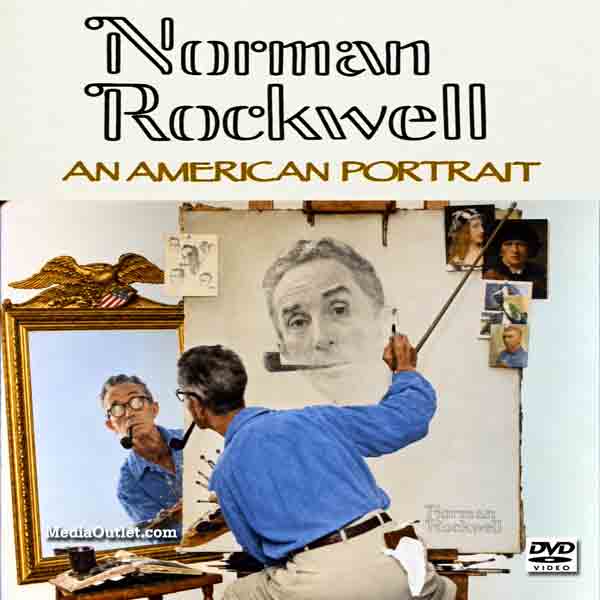
February 3: American Painters Day: --
February 3, 1894: #BOTD: #HBD! Norman Rockwell, American painter,
illustrator and author (d. November 8, 1978) is #born Norman
Perceval Rockwell in New York City. Norman Rockwell was a
20th-century artist whose works have a broad popular appeal in the
United States for their reflection of American culture. Rockwell
is most famous for the cover illustrations of everyday life he
created for The Saturday Evening Post magazine over nearly five
decades. Among the best-known of Rockwell's works are the Willie
Gillis series, Rosie the Riveter, The Problem We All Live With,
Saying Grace, and the Four Freedoms series. He also is noted for
his 64-year relationship with the Boy Scouts of America (BSA),
during which he produced covers for their publication Boys' Life,
calendars, and other illustrations. These works include popular
images that reflect the Scout Oath and Scout Law such as The
Scoutmaster, A Scout is Reverent and A Guiding Hand, among many
others. Norman Rockwell was a prolific artist, producing more than
4,000 original works in his lifetime. Rockwell also was
commissioned to illustrate more than 40 books, including Tom
Sawyer and Huckleberry Finn as well as painting the portraits for
Presidents Eisenhower, Kennedy, Johnson, and Nixon, as well as
those of foreign figures, including Gamal Abdel Nasser and
Jawaharlal Nehru. One of his last portraits was of Colonel Sanders
in 1973. He painted six images for Coca-Cola advertising.
Rockwell's work was dismissed by serious art critics in his
lifetime. Many of his works appear overly sweet in the opinion of
modern critics, especially the Saturday Evening Post covers, which
tend toward idealistic or sentimentalized portrayals of American
life. This has led to the often-deprecatory adjective,
"Rockwellesque". Consequently, Rockwell is not
considered a "serious painter" by some contemporary
artists, who regard his work as bourgeois and kitsch. Writer
Vladimir Nabokov sneered that Rockwell's brilliant technique was
put to "banal" use, and wrote in his book Pnin: "That
Dali is really Norman Rockwell's twin brother kidnapped by Gypsies
in babyhood". He is called an "illustrator" instead
of an artist by some critics, a designation he did not mind, as
that was what he called himself. In his later years, however,
Rockwell began receiving more attention as a painter when he chose
more serious subjects such as the series on racism for Look
magazine. One example of this more serious work is The Problem We
All Live With, which dealt with the issue of school racial
integration. The painting depicts a young black girl, Ruby
Bridges, flanked by white federal marshals, walking to school past
a wall defaced by racist graffiti. This painting was displayed in
the White House when Bridges met with President Obama in 2011. On
Sale @ 15% Off Discount Till Midnight PT!
https://store.earthstation1.com/norman-rockwell-an-american-portrait-dvd.html
Today's
EarthStation1.com 15% Off Commemorative Memorial Title:
Warner-Pathe Newsreels Video Collection DVD, MP4 Download, USB
Stick
Today, February 3, 2026
February 3: Four Chaplains Day: --
February 3, 1943: The European Civil War: World War II: The Second
European War (The European Theater Of World War II): The Battle Of
The Atlantic: #DOTD: #RIP: The SS Dorchester is sunk by a German
U-boat. Only 230 of 902 men aboard survived. The Chapel of the
Four Chaplains, dedicated by President Harry Truman, is one of
many memorials established to commemorate the Four Chaplains
story. The Four Chaplains (The Immortal Chaplains, The Dorchester
Chaplains) -- Methodist minister Reverend George L. Fox, Reform
Rabbi Alexander D. Goode (PhD), Catholic priest Father John P.
Washington, and Reformed Church In America minister the Reverend
Clark V. Poling -- were four World War II First Lieutenant
chaplains who died rescuing civilian and military personnel as the
American troop ship SS Dorchester sank on February 3, 1943, in
what has been referred to as the second-worst sea disaster of
World War II. The Dorchester was a civilian liner converted for
military service in World War II as a War Shipping Administration
troop transport. She was able to carry slightly more than 900
military passengers and crew. The ship left New York on January
23, 1943, en route to Greenland, carrying approximately 900 as
part of a convoy of three ships escorted by Coast Guard Cutters
Tampa, Escanaba, and Comanche. During the early morning hours of
February 3 the vessel was torpedoed by the German submarine U-223
off Newfoundland in the North Atlantic. The chaplains helped the
other soldiers board lifeboats and gave up their own life jackets
when the supply ran out. The chaplains joined arms, said prayers,
and sang hymns as they went down with the ship. The impact of the
chaplains' story was deep, with many memorials and extensive
coverage in the media. Each of the four chaplains was posthumously
awarded the Distinguished Service Cross and the Purple Heart. The
chaplains were nominated for the Medal of Honor, but were
ineligible as they had not engaged in combat with the enemy.
Instead, Congress created a medal for them, with the same weight
and importance as the Medal of Honor. On Sale @ 15% Off Discount
Till Midnight PT!
https://store.earthstation1.com/complete-warnerpathe-newsreels-collection-2-dual-layer-dvd-se2.html
Today's
EarthStation1.com 15% Off Commemorative Memorial Title: WWII
Films: Combat Bulletins And Official War Films DVD, Download, USB
Today, February 3, 2026
February 3: Anniversary Of The Liberation
Of The Battle Of Manila Day: -- February 3: 1945: World War II:
The Pacific War (The Asia-Pacific War, The Pacific Theater Of
World War II): The Pacific Ocean Theater Of World War II: The
Philippines Campaign (1944-1945) (The Philippines Campaign, The
Battle Of The Philippines, The Second Philippines Campaign, The
Liberation Of The Philippines [Operation Musketeer I, Operation
Musketeer II, Operation Musketeer III): The Battle Of Manila
(1945) (The Battle Of Manila) -- The United States and the
Philippine Commonwealth begin a month-long and ultimately
successful bloody battle to retake Manila from Japan. The Battle
Of Manila (Filipino: Labanan Sa Maynila; Japanese: Manira No
Tatakai; Spanish: Batalla De Manila) was fought between February 3
and March 3, 1945 by forces from both the United States and the
Philippines against Japanese troops in Manila, the capital city of
the Philippines. The month-long battle, which resulted in the
death of over 100,000 civilians and the complete devastation of
the city, was the scene of the worst urban fighting fought by
American forces in the Pacific theater. Japanese forces committed
mass murder against Filipino civilians during the battle and
American firepower killed many people. Japanese resistance and
American artillery also destroyed much of Manila's architectural
and cultural heritage dating back to the city's founding. Manila
became one of the most devastated capital cities during the entire
war, alongside Berlin and Warsaw. The battle ended the almost
three years of Japanese military occupation in the Philippines
(1942-1945). The city's capture was marked as General Douglas
MacArthur's key to victory in the campaign of reconquest. To date,
it is the last of the many battles fought within Manila's history.
On Sale @ 15% Off Discount Till Midnight PT!
https://store.earthstation1.com/wwii-films-combat-bulletins-and-official-war-films-4-dvd4.html
Today's
EarthStation1.com 15% Off Commemorative Memorial Title: The
Romantic Spirit TV Series DVD, Video Download, USB Flash Drive
Today, February 3, 2026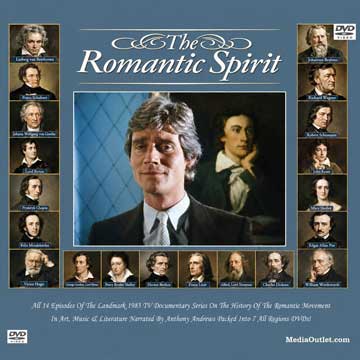
February 3, 1809: #BOTD: #HBD! Felix
Mendelssohn, German composer, pianist, organist and conductor of
the early Romantic period (d. November 4, 1847) #born Jakob Ludwig
Felix Mendelssohn Bartholdy into a Jewish family in Hamburg, at
the time an independent city-state. Mendelssohn's compositions
include symphonies, concertos, piano music, organ music and
chamber music. His best-known works include the overture and
incidental music for A Midsummer Night's Dream, the Italian
Symphony, the Scottish Symphony, the oratorio St. Paul, the
oratorio Elijah, the overture The Hebrides, the mature Violin
Concerto and the String Octet. The melody for the Christmas carol
"Hark! The Herald Angels Sing" is also his.
Mendelssohn's Songs Without Words are his most famous solo piano
compositions. A grandson of the philosopher Moses Mendelssohn,
Felix Mendelssohn was born into a prominent Jewish family. He was
brought up without religion until the age of seven, when he was
baptised as a Reformed Christian. Felix was recognised early as a
musical prodigy, but his parents were cautious and did not seek to
capitalise on his talent. Mendelssohn enjoyed early success in
Germany, and revived interest in the music of Johann Sebastian
Bach, notably with his performance of the St Matthew Passion in
1829. He became well received in his travels throughout Europe as
a composer, conductor and soloist; his ten visits to Britain -
during which many of his major works were premiered - form an
important part of his adult career. Felix Mendelssohn died in
Leipzig, Germany after a series of strokes after a long period of
poor health in the final years of his life. Although he had been
generally meticulous in the management of his affairs, he died
intestate (without a will). Mendelssohn's funeral was held at the
Paulinerkirche, Leipzig, and he is buried at the
Dreifaltigkeitsfriedhof I in Berlin-Kreuzberg. The pallbearers
included Moscheles, Schumann and Niels Gade. Mendelssohn had once
described death, in a letter to a stranger, as a place "where
it is to be hoped there is still music, but no more sorrow or
partings." His essentially conservative musical tastes set
him apart from more adventurous musical contemporaries such as
Franz Liszt, Richard Wagner, Charles-Valentin Alkan and Hector
Berlioz. The Leipzig Conservatory, which he founded, became a
bastion of this anti-radical outlook. After a long period of
relative denigration due to changing musical tastes and
antisemitism in the late 19th and early 20th centuries, his
creative originality has been re-evaluated. He is now among the
most popular composers of the Romantic era. On Sale @ 15% Off
Discount Till Midnight PT!
https://store.earthstation1.com/the-romantic-spirit-tv-series-all-14-episodes-5-dual-layer-d145.html
Today's
EarthStation1.com 15% Off Commemorative Memorial Title: Sold Down
The River: Black Freedom Lost After Civil War DVD, MP4, USB
Today, February 3, 2026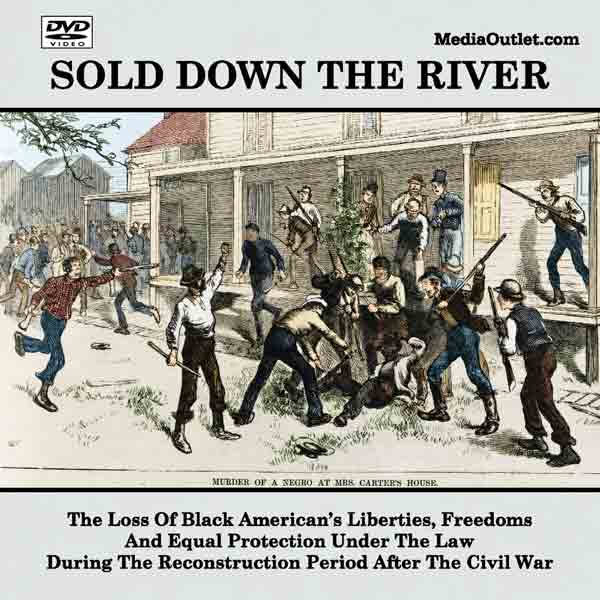
February 3, 1870: The Reconstruction Era
(Reconstruction): The Constitution Of The United States: The
Reconstruction Amendments: Black Suffrage (Black Political
Franchise, Black Franchise, Black Right To Vote, Black Active
Suffrage): The Fifteenth Amendment To The United States
Constitution (Amendment XV): -- After surviving a difficult
ratification fight, the Fifteenth Amendment to the United States
Constitution is duly ratified, which prohibits the federal and
state governments from denying a citizen the right to vote based
on that citizen's "race, color, or previous condition of
servitude". It was ratified on February 3, 1870, as the third
and last of the Reconstruction Amendments. In the final years of
the American Civil War and the Reconstruction Era that followed,
Congress repeatedly debated the rights of the millions of black
former slaves. By 1869, amendments had been passed to abolish
slavery and provide citizenship and equal protection under the
laws, but the election of Ulysses S. Grant to the presidency in
1868 convinced a majority of Republicans that protecting the
franchise of black male voters was important for the party's
future. On February 26, 1869, after rejecting more sweeping
versions of a suffrage amendment, Congress proposed a compromise
amendment banning franchise restrictions on the basis of race,
color, or previous servitude. The amendment created a split within
the women's suffrage movement over the amendment not prohibiting
denying the women the right to vote on account of sex. United
States Supreme Court decisions in the late nineteenth century
interpreted the amendment narrowly. From 1890 to 1910, most black
voters in the South were effectively disenfranchised by new state
constitutions and state laws incorporating such obstacles as poll
taxes and discriminatory literacy tests, from which white male
voters were exempted by grandfather clauses. A system of
whites-only primaries and violent intimidation by white groups
also suppressed black participation. In the twentieth century, the
Court began to interpret the amendment more broadly, striking down
grandfather clauses in Guinn v. United States (1915) and
dismantling the white primary system in the "Texas primary
cases" (1927-1953). Along with later measures such as the
Twenty-fourth Amendment, which forbade poll taxes in federal
elections, and Harper v. Virginia State Board of Elections (1966),
which forbade poll taxes in state elections, these decisions
significantly increased black participation in the American
political system. To enforce the amendment, Congress enacted the
Voting Rights Act of 1965, which provided federal oversight of
elections in discriminatory jurisdictions, banned literacy tests
and similar discriminatory devices, and created legal remedies for
people affected by voting discrimination. On Sale @ 15% Off
Discount Till Midnight PT!
https://store.earthstation1.com/sold-down-the-river-black-liberty39s-loss-after-civil-war-dvd-mp4-394.html
Today's
EarthStation1.com 15% Off Commemorative Memorial Title: Great
Depression Films Collection DVD, Video Download, USB Flash Drive
Today, February 3, 2026
February 3, 1904: #BOTD: Pretty Boy
Floyd, American gangster (d. October 22, 1934) is #born Charles
Arthur Floyd in Bartow County, Georgia. Pretty Boy Floyd was an
American bank robber who operated in the Midwest and West South
Central States, and his criminal exploits gained widespread press
coverage in the 1930s. Following the death of John Dillinger that
July, "Pretty Boy" Floyd was named "Public Enemy
No. 1", a phrase appropriated by J. Edgar Hoover and the FBI
to describe various notorious fugitives they were pursuing
throughout the 1930s. . Like several other prominent outlaws of
that era, he was pursued and killed by a group of FBI agents led
by Melvin Purvis in East Liverpool, Ohio on October 22, 1934.
Historians have speculated as to which officers were at the event,
local or the FBI: known accounts document that local officers
Robert "Pete" Pyle and George Curran were present at his
fatal shooting and also at his embalming. Floyd has continued to
be a familiar figure in American popular culture, sometimes seen
as notorious, but also at other times viewed as a tragic figure,
partly a victim of the hard times of the Great Depression in the
United States. On Sale @ 15% Off Discount Till Midnight PT!
https://store.earthstation1.com/great-depression-films-2-dvd-se2.html
Today's
EarthStation1.com 15% Off Commemorative Memorial Title: America:
The Second Century Documentary Series DVD, Download, USB
Today, February 3, 2026
February 3, 1913: The History Of The
United States: The Constitution Of The United States: The History
Of Taxation In The United States: The Sixteenth Amendment
Amendment To The United States Constitution (Amendment XVI): --
Congress is allowed to levy an income tax, without apportioning it
among the states or basing it on the United States Census, as The
Sixteenth Amendment to the United States Constitution is ratified
by the requisite number of states. It was passed by Congress in
1909 in response to the 1895 Supreme Court case of Pollock v.
Farmers' Loan & Trust Co., where in a 5-to-4 decision, the
Supreme Court struck down the income tax imposed by the
Wilson-Gorman Tariff Act for being an unapportioned direct tax.
The Sixteenth Amendment effectively overruled the Supreme Court's
ruling in Pollock. Prior to the early 20th century, most federal
revenue came from tariffs rather than taxes, although Congress had
often imposed excise taxes on various goods. The Revenue Act of
1861 had introduced the first federal income tax, but that tax was
repealed in 1872. During the late nineteenth century, various
groups, including the Populist Party, favored the establishment of
a progressive income tax at the federal level. These groups
believed that tariffs unfairly taxed the poor, and they favored
using the income tax to shift the tax burden onto wealthier
individuals. For several years after Pollock, Congress did not
attempt to implement another income tax, largely due to concerns
that the Supreme Court would strike down any attempt to levy an
income tax. In 1909, during the debate over the Payne-Aldrich
Tariff Act, Congress proposed the Sixteenth Amendment to the
states. Though conservative Republican leaders had initially
expected that the amendment would not be ratified, a coalition of
Democrats, progressive Republicans, and other groups ensured that
the necessary number of states ratified the amendment. Shortly
after the amendment was ratified, Congress imposed a federal
income tax with the Revenue Act of 1913. The Supreme Court upheld
that income tax in the 1916 case of Brushaber v. Union Pacific
Railroad Co., and the federal government has continued to levy an
income tax since 1913. On Sale @ 15% Off Discount Till Midnight
PT!
https://store.earthstation1.com/america-the-second-century-us-2nd-100-years-history-621006.html
Today's
EarthStation1.com 15% Off Commemorative Memorial Title: World War
1 TV Series With Robert Ryan DVD, Video Download, USB Drive
Today, February 3, 2026
February 3, 1917: The European Civil War:
World War I: The First European War (The European Theater Of World
War I): The Western Front Of World War I: Naval Warfare Of World
War I: The U-Boat Campaign (The U-Boat Campaign 1914-1918): The
1917 Resumption Of Snrestricted Submarine Warfare: -- The United
States breaks off diplomatic relations with Germany in response to
Germany's January 31 announcement that its U-boat Campaign would
resume unrestricted submarine warfare after a two-year hiatus.
These events were ultimately to lead to the sinking of the British
ocean liner RMS Lusitania, which killed 128 US citizens, and
opened the path to an eventual declaration of war between the
United States and Germany. On Sale @ 15% Off Discount Till
Midnight PT!
https://store.earthstation1.com/world-war-1-robert-ryan-4-dual-layer-dvds-26-episode-tv-se1426.html
Today's
EarthStation1.com 15% Off Commemorative Memorial Title: The Road
To War: Years Between WWI & WWII TV Series DVD, Download, USB
Today, February 3, 2026
February 3, 1933: The Interwar Period
(The Interbellum, Between The Wars): Nazi Germany (The German
Reich, The Third Reich): Lebensraum (German: "Living Space"):
-- Newly appointed German Chancellor Adolf Hitler announces that
the expansion of Lebensraum into Eastern Europe, and its ruthless
Germanisation, are the ultimate geopolitical objectives of Third
Reich foreign policy. Lebensraum is a German concept of
expansionism and Volkisch nationalism, the philosophy and policies
of which were common to German politics from the 1890s to the
1940s. First popularized around 1901, Lebensraum became a
geopolitical goal of Imperial Germany in World War I (1914-1918),
as the core element of the Septemberprogramm of territorial
expansion. The most extreme form of this ideology was supported by
the Nazi Party and Nazi Germany. Lebensraum was a leading
motivation of Nazi Germany to initiate World War II, and it would
continue this policy until the end of the conflict. Following
Adolf Hitler's rise to power, Lebensraum became an ideological
principle of Nazism and provided justification for the German
territorial expansion into Central and Eastern Europe. The Nazi
policy Generalplan Ost (lit._'Master Plan for the East') was based
on its tenets. It stipulated that Germany required a Lebensraum
necessary for its survival and that most of the populations of
Central and Eastern Europe would have to be removed permanently
(either through mass deportation to Siberia, extermination, or
enslavement), including Polish, Ukrainian, Russian, Czech, and
other Slavic nations considered non-Aryan. The Nazi government
aimed at repopulating these lands with Germanic colonists in the
name of Lebensraum during and following World War II. Entire
populations were ravaged by starvation; any agricultural surplus
was used to feed Germany. The Jewish population was exterminated
outright. Hitler's strategic program for world domination was
based on the belief in the power of Lebensraum, especially when
pursued by a racially superior society. People deemed to be part
of non-Aryan races, within the territory of Lebensraum expansion,
were subjected to expulsion or destruction. The eugenics of
Lebensraum assumed it to be the right of the German Aryan master
race (Herrenvolk) to remove the indigenous people in the name of
their own living space. They took inspiration for this concept
from outside Germany. Hitler and Nazi officials took a particular
interest in manifest destiny, and attempted to replicate it in
occupied Europe. Nazi Germany also supported other Axis Powers'
expansionist ideologies such as Fascist Italy's spazio vitale and
Imperial Japan's Hakko ichiu. On Sale @ 15% Off Discount Till
Midnight PT!
https://store.earthstation1.com/the-road-to-war-dvd-set-all-8-tv-shows-4-dis84.html
Today's
EarthStation1.com 15% Off Commemorative Memorial Title: Victory At
Sea (1954) Rare WWII Movie DVD, MP4 Download, USB Stick
Today, February 3, 2026
February 3, 1944: World War II: The
Pacific War (The Asia-Pacific War, The Pacific Theater Of World
War II): The Pacific Ocean Theater Of World War II: The Gilbert
and Marshall Islands Campaign: Operation Galvanic: The Battle Of
Kwajalein: -- U.S. Army and Marine forces seize Kwajalein Atoll
from the defending Japanese garrison. Four days earlier, on
January 31, 1944, American forces landed on Kwajalein Atoll and
other islands in the Japanese-held Marshall Islands as part of the
victorious end of its Gilbert and Marshall Islands Campaign, a
series of battles fought from November 1943 through February 1944.
They were the first steps of the drive across the central Pacific
by the United States Pacific Fleet and Marine Corps. The purpose
was to establish airfields and naval bases that would allow air
and naval support for upcoming operations across the Central
Pacific. Operations Galvanic and Kourbash were the code names for
the Gilberts campaign that included the seizures of Tarawa and
Makin. Operations Flintlock and Catchpole were aimed at capturing
Japanese Bases at Kwajalein, Eniwetok, and Majuro in the Marshall
Islands. On Sale @ 15% Off Discount Till Midnight PT!
https://store.earthstation1.com/victory-at-sea-1954-dvd-the-movie-rare-wwii-1954.html
Today's
EarthStation1.com 15% Off Commemorative Memorial Title: Germany:
28 Months After V-E Day: Bombing Devastation DVD, MP4, USB
Today, February 3, 2026
February 3, 1945: The European Civil War:
World War II: The Second European War (The European Theater Of
World War II): The Western Front Of World War II: Aviation:
Military Aviation: Air Warfare Of World War II: Strategic Bombing
During World War II: European Air Operations During The Battle Of
Europe: The Bombing Of Berlin In World War II: Operation
Thunderclap: -- 1,000 B-17s of the Eighth Air Force bomb Berlin, a
raid which kills between 2,500 and 3,000 and dehouses another
120,000. The bombing was so dense that it caused a city fire
spreading eastwards, driven by the wind, over the south of
Friedrichstadt and the northwest of neighboured Luisenstadt. The
fire lasted for four days until it had burnt everything
combustible in its range to ashes and after it had reached
waterways, large thoroughfares, and parks that the fire could not
jump over. Due to the exhaustion of German supplies the German
anti-aircraft defense was under-equipped and weak so that out of
the 1,600 US aircraft committed, only 36 were shot down and their
crews - as far as they survived the crash of their planes - taken
as prisoners-of-war. First Air Division commander Lt. Col.
Rosenthal was among those shot down and survived, but was rescued
by the Soviet armed forces and eventually returned to England. A
number of monuments, such as French Luisenstadt Church, St. James
Church, Jerusalem's Church, Luisenstadt Church, St. Michael's
Church, St. Simeon Church, and the Marcher Protestant Consistory
(today's entrance of Jewish Museum Berlin) as well as government
and Nazi Party buildings were also hit, including the Reich
Chancellery, the Party Chancellery, the Gestapo headquarters, and
the People's Court. The Unter den Linden, Wilhelmstrasse and
Friedrichstrasse areas were turned into seas of ruins. Among the
dead was Roland Freisler, the infamous head justice of the
People's Court. On Sale @ 15% Off Discount Till Midnight PT!
https://store.earthstation1.com/germany-28-months-after-ve-day-d28.html
Today's
EarthStation1.com 15% Off Commemorative Memorial Title: Restless
Conscience: Resistance To Hitler In Germany DVD MP4 USB Drive
Today, February 3, 2026
February 3, 1945: The European Civil War:
World War II: The Second European War (The European Theater Of
World War II): The Western Front Of World War II: Air Warfare Of
World War II: Strategic Bombing During World War II: The Bombing
Of Berlin In World War II: Operation Thunderclap: -- #DOTD: Roland
Freisler, infamous Nazi jurist and judge in Nazi Germany, State
Secretary of the Reich Ministry of Justice, President of the
People's Court, attendee at the Wannsee Conference in 1942 which
set in motion the Holocaust (b. October 30, 1893) #dies when he is
crushed by a masonry column that fell when an Operation
Thunderclap bomb, dropped by an American Eighth Air Force B-17,
scores a direct hit upon the People's Court while he was presiding
over a session of the court. Hearing the air-raid sirens, Freisler
hastily adjourned the court and ordered that the prisoners before
him be taken to an air-raid shelter, but stayed behind to gather
files before leaving. His body was found beneath the rubble still
clutching the files he had stopped to retrieve. AP Foreign
Correspondent Jerje Granberg reported, "Apparently nobody
regretted his death." Luise Jodl, then the wife of General
Alfred Jodl, recounted more than 25 years later that she had been
working at the Lutzow Hospital when Freisler's body was brought
in, and that a worker commented, "It is God's verdict."
According to Mrs. Jodl, "Not one person said a word in
reply.". On Sale @ 15% Off Discount Till Midnight PT!
https://store.earthstation1.com/restless-conscience-resistance-to-hitler-in-germany-1933193345.html
Today's
EarthStation1.com 15% Off Commemorative Memorial Title: Offshore
Pirate Radio 1960s-1980s MP3s DVD, Audio Download, USB Drive
Today, February 3, 2026
February 3, 1947: #BOTD: #HBD! Melanie
Anne Safka-Schekeryk, professionally known as Melanie or Melanie
Safka, American, singer and songwriter, best known for the 1971-72
global hit "Brand New Key", her cover of "Ruby
Tuesday", her composition "What Have They Done to My
Song Ma", and her 1970 international breakthrough hit "Lay
Down (Candles in the Rain)" (inspired by her experience of
performing at the 1969 Woodstock music festival) (d. January 23,
2024) is #born born Melanie Anne Safka in the Astoria neighborhood
of Queens, New York City to Frederick M. Safka (1924-2009) of
Ukrainian and Russian ethnic background and jazz singer Pauline
"Polly" Altomare (1926-2003) of Italian heritage.
Schekeryk She moved with her family to Long Branch, New Jersey,
and attended Long Branch High School. Bothered by being pegged by
her classmates as a "beatnik" in school, she ran away to
California and, after her return to New Jersey, transferred to Red
Bank Regional High School in Red Bank, New Jersey; she graduated
in 1964, though she was blocked from attending her commencement
exercise due to an overdue library book. In the 1960s, Melanie
started performing at The Inkwell, a coffee house in the West End
section of Long Branch. After high school, her parents insisted
that she go to college, so she studied acting at the American
Academy of Dramatic Arts in New York, where she began singing in
the folk clubs of Greenwich Village, such as The Bitter End, and
signed her first recording contract. She was one of only three
solo women who performed at the Woodstock festival in 1969 and the
inspiration for her first hit song, "Lay Down (Candles in the
Rain)", apparently arose from the Woodstock audience lighting
candles during her set (although most of the "candles"
were actually matches or lighters). The recording became a hit in
Europe, Australia, Canada, and the United States in 1970. In 1970,
Melanie was the only artist to ignore the court injunction banning
the Powder Ridge Rock Festival scheduled to be held on July 31,
August 1 and 2, 1970. She played for the crowd on a homemade stage
powered by Mister Softee trucks. In 1971, she formed her own
label, Neighborhood Records, with Peter Schekeryk who was also her
producer and husband. She had her biggest American hit on the
Neighborhood label, the novelty-sounding 1972 number one "Brand
New Key" (often referred to as "The Roller Skate Song").
"Brand New Key" sold over three million copies worldwide
and was featured in the 1997 movie Boogie Nights. When first
released, "Brand New Key" was banned by some radio
stations because some heard sexual innuendo in the lyrics. Melanie
has acknowledged the possibility of reading an unintended sexual
innuendo in the song, stating, "I wrote [Brand New Key] in
about fifteen minutes one night. I thought it was cute; a kind of
old thirties tune. I guess a key and a lock have always been
Freudian symbols, and pretty obvious ones at that. There was no
deep serious expression behind the song, but people read things
into it. They made up incredible stories as to what the lyrics
said and what the song meant. In some places, it was even banned
from the radio ... My idea about songs is that once you write
them, you have very little say in their life afterward ... People
will take it any way they want to take it." Melanie married
her record producer Peter Schekeryk in 1968. They had three
children; daughter Leilah born in 1973, daughter Jeordie in 1975,
and son Beau-Jarred in 1980. Leilah and Jeordie, when aged seven
and six, released a cover of "There's No One Quite Like
Grandma" that charted in Canada, reaching No. 27. Melanie was
a vegetarian in the early 1970s; she also practiced fasting.
Melanie identified herself politically as a libertarian, stating,
"I am not a Democrat, a Socialist, or a Republican."[53][17]
She said that she had experienced acceptance from a "universal
force of motherhood" after receiving a hug from Mata
Amritanandamayi, a.k.a. Amma ("Mother") or the "hugging
saint" from India, as she is also known, which had inspired
her to write "Motherhood of Love". Melanie died at age
76 in the Nashville metropolitan area where Melanie resided. Her
three children shared their mother's death in a Facebook post and
her reps mentioned "an illness", but no cause was given.
She is buried at Larkspur Conservation At Taylor Hollow cemetery
in Westmoreland, Tennessee. #Melanie #MelanieSafka #Singers
#Songwriters #FolkMusic #PopMusic #CountryMusic #MP3
#AudioDownload #DVD On Sale @ 15% Off Discount Till Midnight PT!
https://store.earthstation1.com/offshore-pirate-radio-2-dual-layer-mp3-dvds-uk-amp-euro23.html
Today's
EarthStation1.com 15% Off Commemorative Memorial Title: War And
Peace In The Nuclear Age TV Series DVD, Download, USB Drive
Today, February 3, 2026
February 3, 1961: The Aftermath Of World
War II: The Cold War: Nuclear Warfare: Doomsday Scenarios:
Operation Looking Glass (Looking Glass, Airborne National Command
Post [ABNCP], The Doomsday Plane): -- The United States Air Forces
begins Operation Looking Glass, and over the next 30 years, a
"Doomsday Plane" is always in the air, with the
capability of taking direct control of the United States' bombers
and missiles in the event of the destruction of the SAC's command
post. Operation Looking Glass is the historic code name for an
airborne command and control center operated by the United States.
In more recent years it has been more officially referred to as
the ABNCP (Airborne National Command Post). It provides command
and control of U.S. nuclear forces in the event that ground-based
command centers have been destroyed or otherwise rendered
inoperable. In such an event, the general officer aboard the
Looking Glass serves as the Airborne Emergency Action Officer
(AEAO) and by law assumes the authority of the National Command
Authority and could command execution of nuclear attacks. The AEAO
is supported by a battle staff of approximately 20 people, with
another dozen responsible for the operation of the aircraft
systems. The name Looking Glass, which is another name for a
mirror, was chosen for the Airborne Command Post because the
mission operates in parallel with the underground command post at
Offutt Air Force Base. On Sale @ 15% Off Discount Till Midnight
PT!
https://store.earthstation1.com/war-and-peace-in-the-nuclear-age-dvd-set-tv-series-7-disc7.html
Today's
EarthStation1.com 15% Off Commemorative Memorial Title: To The
Moon: The Story In Sound Set CD, MP3 Download, USB Flash Drive
Today, February 3, 2026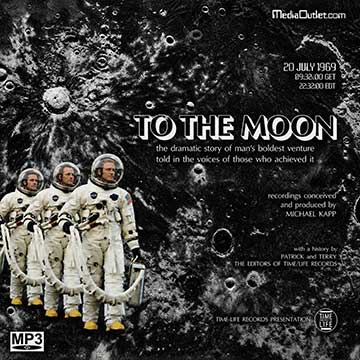
February 3, 1966: 1966: The History Of
Spaceflight: The Aftermath Of World War II: The Cold War: The
Space Age: The Space Race: Missions To The Moon: Space Probes:
Lunar Space Probes: The Soviet Space Program: The Luna Programme
(Pejorative: The Lunik Program): Outer Space Firsts: Luna 9 (Ye-6
No.13, Pejorative: Lunik 9, Lunik IX): -- The Soviet lunar space
probe Luna 9 becomes the first spacecraft to achieve a survivable
landing on a celestial body when it makes a soft landing on the
Moon, and the first spacecraft to take pictures from the surface
of the Moon, as part of the Soviet Union's Luna program, a series
of robotic spacecraft missions sent to the Moon by the Soviet
Union between 1959 and 1976. At an altitude of 8,300 kilometres
(5,200 mi) from the Moon, the spacecraft was oriented for the
firing of its retrorockets and its spin was stopped in preparation
for landing. From this moment the orientation of the spacecraft
was supported by measurements of directions to the Sun and the
Earth using an optomechanical system. At 74.885 kilometres (46.531
mi) above the lunar surface, the radar altimeter triggered the
jettison of the side modules, the inflation of the airbags and the
firing of the retro rockets. Approximately at 250 metres (820 ft)
from the surface, the main retrorocket was turned off by the
integrator of an acceleration having reached the planned velocity
of the braking manoeuver. The four outrigger engines were used to
slow the craft. Approximately 5 metres (16 ft) above the lunar
surface, a contact sensor touched the ground triggering the
engines to be shut down and the landing capsule to be ejected. The
craft landed at 22 kilometres per hour (14 mph). The spacecraft
bounced several times before coming to rest in Oceanus Procellarum
west of Reiner and Marius craters at approximately 7.08 N, 64.37 W
on 3 February 1966 at 18:45:30 GMT. The spacecraft was developed
in the design bureau then known as OKB-1, under Chief Designer
Sergei Korolev (who had died before the launch). The first 11 Luna
missions were unsuccessful for a variety of reasons. At that time
the project was transferred to Lavochkin design bureau since OKB-1
was busy with a manned expedition to the Moon. Luna 9 was the
twelfth attempt at a soft-landing by the Soviet Union; it was also
the first successful deep space probe built by the Lavochkin
design bureau, which ultimately would design and build almost all
Soviet (later Russian) lunar and interplanetary spacecraft. All
operations prior to landing occurred without fault, and the 58
centimetres (23 in) spheroid ALS capsule landed on the Moon at
18:45:30 GMT on 3 February 1966 west of the craters Reiner and
Marius in the Ocean of Storms (at 7_8' north latitude and 64_22'
west longitude). Approximately five minutes after touchdown, Luna
9 began transmitting data to Earth, but it was seven hours (after
the Sun had climbed to 7_ elevation) before the probe began
sending the first of nine images (including five panoramas) of the
surface of the Moon. Approximately 250 seconds after landing in
the Oceanus Procellarum, four petals that covered the top half of
the spacecraft opened outward for increased stability. The
television camera system began a photographic survey of the lunar
environment. Seven radio sessions with a total of 8 hours and 5
minutes were transmitted, as well as three series of TV pictures.
After assembly the photographs gave a panoramic view of the
immediate lunar surface, comprising views of nearby rocks and of
the horizon, 1.4 kilometres (0.87 mi) away. The pictures from Luna
9 were not released immediately by the Soviet authorities, but
scientists at Jodrell Bank Observatory in England, which was
monitoring the craft, noticed that the signal format used was
identical to the internationally agreed Radiofax system used by
newspapers for transmitting pictures. The Daily Express rushed a
suitable receiver to the Observatory and the pictures from Luna 9
were decoded and published worldwide. The BBC speculated that the
spacecraft's designers deliberately fitted the probe with
equipment conforming to the standard, to enable reception of the
pictures by Jodrell Bank. The radiation detector, the only
scientific instrument on board, measured dosage of 30 millirads
(0.3 milligrays) per day. The mission also determined that a
spacecraft would not sink into the lunar dust; that the ground
could support a lander. The last contact with the spacecraft was
at 22:55 GMT on 6 February 1966. The Soviet Union launched Luna 9
on January 31, 1966 atop a Molniya-M 8K78M (R-7 Semyorka) rocket,
serial number 103-32, from the Baikonur Cosmodrome Site 31 launch
site in the Kazakh Soviet Socialist Republic at 22:55 GMT. The
lander had a mass of 99 kilograms (218 lb). It used a landing bag
to survive the impact speed of 22 kilometres per hour (14 mph). It
was a hermetically sealed container with radio equipment, a
program timing device, heat control systems, scientific apparatus,
power sources, and a television system. The first three stages of
the four-stage carrier rocket injected the payload and fourth
stage into low Earth orbit, at an altitude of 168 by 219
kilometres (104 by 136 mi) and an inclination of 51.8 dg. The
fourth stage, a Blok-L, then fired to raise the perigee of the
orbit to a new apogee approximately 500,000 kilometres (310,000
mi), before deploying Luna 9 into a highly elliptical geocentric
orbit. For thermal control, the spacecraft then spun itself up to
0.67 rpm using nitrogen jets. On February 1 at 19:29 GMT, a
mid-course correction took place involving a 48-second burn and
resulting in a delta-v of 71.2 metres per second (234 ft/s). At an
altitude of 8,300 kilometres (5,200 mi) from the Moon, the
spacecraft was oriented for the firing of its retrorockets and its
spin was stopped in preparation for landing. From this moment the
orientation of the spacecraft was supported by measurements of
directions to the Sun and the Earth using an optomechanical
system. At 74.885 kilometres (46.531 mi) above the lunar surface,
the radar altimeter triggered the jettison of the side modules,
the inflation of the airbags and the firing of the retro rockets.
Approximately at 250 metres (820 ft) from the surface, the main
retrorocket was turned off by the integrator of an acceleration
having reached the planned velocity of the braking manoeuver. The
four outrigger engines were used to slow the craft. Approximately
5 metres (16 ft) above the lunar surface, a contact sensor touched
the ground triggering the engines to be shut down and the landing
capsule to be ejected. The craft landed at 22 kilometres per hour
(14 mph). The spacecraft bounced several times before coming to
rest in Oceanus Procellarum west of Reiner and Marius craters at
approximately 7.08 N, 64.37 W on February 3, 1966 at 18:45:30 GMT.
The spacecraft was developed in the design bureau then known as
OKB-1, under Chief Designer Sergei Korolev (who had died before
the launch). The first 11 Luna missions were unsuccessful for a
variety of reasons. At that time the project was transferred to
Lavochkin design bureau since OKB-1 was busy with a manned
expedition to the Moon. Luna 9 was the twelfth attempt at a
soft-landing by the Soviet Union; it was also the first successful
deep space probe built by the Lavochkin design bureau, which
ultimately would design and build almost all Soviet (later
Russian) lunar and interplanetary spacecraft. All operations prior
to landing occurred without fault, and the 58 centimetres (23 in)
spheroid ALS capsule landed on the Moon at 18:45:30 GMT on
February 3, 1966 west of the craters Reiner and Marius in the
Ocean of Storms (at 7_8' north latitude and 64_22' west
longitude). Approximately five minutes after touchdown, Luna 9
began transmitting data to Earth, but it was seven hours (after
the Sun had climbed to 7_ elevation) before the probe began
sending the first of nine images (including five panoramas) of the
surface of the Moon. Approximately 250 seconds after landing in
the Oceanus Procellarum, four petals that covered the top half of
the spacecraft opened outward for increased stability. The
television camera system began a photographic survey of the lunar
environment. Seven radio sessions with a total of 8 hours and 5
minutes were transmitted, as well as three series of TV pictures.
After assembly the photographs gave a panoramic view of the
immediate lunar surface, comprising views of nearby rocks and of
the horizon, 1.4 kilometres (0.87 mi) away. The pictures from Luna
9 were not released immediately by the Soviet authorities, but
scientists at Jodrell Bank Observatory in England, which was
monitoring the craft, noticed that the signal format used was
identical to the internationally agreed Radiofax system used by
newspapers for transmitting pictures. The Daily Express rushed a
suitable receiver to the Observatory and the pictures from Luna 9
were decoded and published worldwide. The BBC speculated that the
spacecraft's designers deliberately fitted the probe with
equipment conforming to the standard, to enable reception of the
pictures by Jodrell Bank. The radiation detector, the only
scientific instrument on board, measured dosage of 30 millirads
(0.3 milligrays) per day. The mission also determined that a
spacecraft would not sink into the lunar dust; that the ground
could support a lander. The last contact with the spacecraft was
at 22:55 GMT on February 6, 1966. On Sale @ 15% Off Discount Till
Midnight PT!
https://store.earthstation1.com/to-the-moon-the-story-in-sound-complete-6-album-set-mp3-63.html
Today's
EarthStation1.com 15% Off Commemorative Memorial Title: We
Remember: The Space Shuttle Pioneers 1981-1986 DVD, Download, USB
Today, February 3, 2026
February 3, 1995: Outer Space Firsts:
Rocket Launches: The History Of Spaceflight: The Aftermath Of
World War II: The Cold War: The Space Age: Space Programs Of The
United States: Human Spaceflight Programs: The Space Shuttle
Program (The Space Transportation System (STS)): The Shuttle-Mir
Program: Space Shuttle Mission STS-63: -- Astronaut Eileen
Collins, test pilot, flight instructor and United States Air Force
(USAF) colonel, becomes the first woman to pilot the Space Shuttle
when Space Shuttle Discovery, which first flew in 1984, is night
launched at 05:22:04 UTC from the Kennedy Space Center Launch
Complex 39B (LC-39B) in Florida, and carries out the first
rendezvous of the American Space Shuttle with Russia's space
station Mir. STS-63 was the second mission of the US/Russian
Shuttle-Mir Program. Known as the 'Near-Mir' mission, it was the
20th mission for Discovery, and marked the first EVAs for both a
UK born astronaut, Michael Foale, and a US astronaut of African
heritage, Bernard A. Harris, Jr. It also carried out the
successful deployment and retrieval of the Spartan-204 platform,
along with the scheduled rendezvous and flyaround of Mir, in
preparation for STS-71, the first mission to dock with Mir. On
Sale @ 15% Off Discount Till Midnight PT!
https://store.earthstation1.com/we-remember-the-space-shuttle-pioneers-198119811986.html
Today's
EarthStation1.com #OnThisDay Commemorative Memorial Title: Super
Sense Animal Perception/Plant Adaptation TV Series DVD, MP4, USB
Today, February 3, 2026 February 3: Doggy Date Night: -- Take the
chance to hang out with your pup on National Doggy Date Night on .
You're working all day, out running errands, or spending time with
your family and loved ones. How about slowing down to spend some
quality time with the one who is always there for you - your dog!
People have kept dogs as pets for 12,000 years. Throughout
history, humans have benefitted from that relationship with dogs,
from service dogs to police and firehouse dogs, to just everyday
pets making extraordinary saves. Over the years man has grown to
appreciate our relationship with dogs so much more. There are
countless songs, movies, books, and TV shows built around our
relationship with canines. From the timeless classic "Old
Yeller" to "Lassie" and "Wonder Dog,"
dogs have become more than a part of society, they're a part of
our families, and with good reason. They are steadfast companions
and there are enough types (more than 150 breeds!) out there for
everyone. Dogs can live for as long as 15 years, making them a
significant part of their owner's life. For years, scientists have
studied the special connection between dogs and humans,
consistently finding that dogs provide social and emotional
benefits for their owners, and the bond promotes positive
well-being for both the owner and the dog. So they aren't just
good for your Instagram, they're good for your health. They give
us so much love and affection, it only makes sense that we return
that love, right? They don't call them man's best friend for
nothing: dogs are loyal, protective, and always excited to see
you! On this February 3, spend a little extra time with your dog:
play games like fetch or frisbee, or go on a nice long hike. Go
beyond the standard walks and couch snuggles and make an event out
of it to make your pooch feel special!
https://store.earthstation1.com/super-sense--animal-perception-tv-series-dvd-mp4-download-usb-driv4.html
Today's
EarthStation1.com #OnThisDay Commemorative Memorial Title: Animals
At War: Animals In The Military + Bonus Title MP4 Download DVD
Today, February 3, 2026February 3: National Golden Retriever
Day: -- Celebrates one of the most popular dog breeds in the US,
and for good reason. The calm temperament, intelligence, and
playfulness make them ideal best friends for any dog lover. Plus,
they make great disability assistance animals, like seeing eye
dogs for the blind and hearing dogs for the deaf. They've ended up
saving lives in these roles - no wonder they have a holiday named
after them! While the holiday itself only began in 2012, Golden
Retrievers have a long and storied history starting all the way
back in Scotland in the mid-19th century. Here's a quick dip into
the origins of this beloved canine. A need for the breed arose
when common hunting dogs of the day were proving inadequate for
retrieving felled game over land and water. Guns had improved by
the early 1800s, so Scottish hunters were shooting from much
greater distances over swampy marshland and finding their dogs
were losing or maiming their precious birds. They needed a dog
with a soft mouth and excellent fetching capabilities, so they
bred their best water spaniels with retrievers, and voila! The
first Golden Retriever was born. Nowadays, Golden Retrievers have
evolved well beyond retrieving felled fowl. Not only do they make
great disability assistance dogs, but they also specialize in
detection and search and rescue efforts due to their stellar
sniffing abilities. Their patience and gentleness makes them
perfect for children or hectic households. National Golden
Retriever Day was founded when a woman named Kristen Shroyer
realized there was no day set as a tribute for these dogs. She set
the date, March 3, as the birthday of her late Golden, Quincy, who
was sadly lost to cancer at only 7 years old. In modern times, you
might recognize Goldens in famous roles movies like Air Bud,
Homeward Bound, and Napoleon. And as recently as 2019, a Golden
Retriever named Kira went viral for saving two dogs trapped in
frozen ice, fetching them and rounding them up for her owner, all
captured on video. They truly are a one-of-a-kind breed!
https://store.earthstation1.com/animals-at-war-military-animals-mp4-video-download-dv4.html
Today's
EarthStation1.com #OnThisDay Commemorative Memorial Title: TV
Commercials: The Cable Age Classics Vol. 4 MP4 Video Download DVD
Today, February 3, 2026February 3: Take A Cruise Day: -- Let's
sail and celebrate! Sailing the ocean aboard a massive cruiser is
a wonderful experience. Cruise ships are one of the largest
human-made vehicles on Earth. Ships are one of the most common
modes of intercontinental and international freight transport. It
is also cheap compared to air travel and is one of the oldest
modes of travel. Luxury cruise ships are relatively new; they
became common during the 19th century. Overall, a cruise
experience would be a life-changing moment for most people.
Three-quarters of the Earth is covered by the ocean. So, it is
natural that humans would find ways to cross the massive expanse
of the deep blue ocean. People started crossing the ocean around
53,000 - 65,000 years ago. Archeologists believe people from the
Sundaland peninsula crossed to the Sahul landmass, which is
modern-day Australia. The ancestor of modern sailboats started to
appear some 6,000 years ago. People from early civilizations like
Mesopotamia, Egypt, and the Indus Valley used sailboats to trade
with each other. The 1800s saw the development of modern
sailboats, which were used to trade between countries. Trade
gradually resulted in the era of colonization. Modern ships
started to appear with the industrial revolution and the push for
war efforts throughout Europe and America. Until 1800, ships were
mostly used for transporting mail and other cargo. The Black Ball
Line, New York, started the first passenger service between
England and North America. The Peninsular Steam Navigation Company
started the first leisure cruise line. Between 1900 and 1950,
leisure ships went bankrupt due to the world wars and the great
depression that followed. Then, in 1960, the wind changed
directions again, this time in favor of cruise lines. The cruise
experience only grew in popularity from then. Nowadays, every type
of cruise is available, from a two-day program to around-the-world
cruises.
https://store.earthstation1.com/tv-commercials-the-cable-age-classics-vol-4-mp4-video-download-d44.html
Today's
EarthStation1.com #OnThisDay Commemorative Memorial Title: TV
Commercials: The Cable Age Classics III DVD, Download, USB Drive
Today, February 3, 2026February 3: National Wedding Ring Day: --
A romantic occasion for couples who are in love. It marks the day
when couples exchange wedding rings in matrimony. Hence, couples
who want to reignite their sparks can use this occasion to do
something memorable and sweet for each other. No - it doesn't
matter if you have been together for a few months or a few
decades. You must utilize every opportunity you get to make your
partner feel special. So get ready to exchange your rings again
and recite some wedding vows. Today, wedding rings are considered
a must in almost all cultures across the globe. When a couple is
about to tie the knot, rings are exchanged by both parties to
signify their commitment to each other. Those rings are then worn
at all times and often indicate who is single and who is
committed. But wedding/engagement rings weren't always a thing.
There was a time when all that was needed to confirm a marriage
was a verbal exchange of vows. It is widely believed, however,
that in ancient Egypt lovers would wear rings made out of woven
reed and leather to declare the love they felt for each other.
Later on, the Greeks and Romans started sporting signet rings to
show they are engaged to be married. The history of the evolution
of wedding rings not only includes how the tradition was formed;
it also looks at the materials and form of the rings exchanged
over time. For instance, during the Middle Ages, the rings
partners gave to each other had an image of Jesus Christ. Sometime
in the 1100s, people exchanged Irish rings known as the
'Claddagh.' This type of ring had a special design that showed a
heart in between two clasping hands. In the 15th century, people
wore 'Posy' rings. These rings were special because they had a
verse or a poem inscribed on them. Yes, people didn't always wear
diamond rings, and the stone itself really has nothing to do with
the concept of marriage and commitment. The craze of exchanging
diamond rings started in 1947 because of a marketing gimmick by De
Beers. This was a corporation known for mining diamonds. To
increase their sales, they started marketing diamonds as something
that was needed in a marriage. This was the time when the phrase
"diamonds are forever" was launched.
https://store.earthstation1.com/tv-commercials-the-cable-age-classics-iii-dvd.html
Today's
EarthStation1.com #OnThisDay Commemorative Memorial Title:
Pioneers Of Surgery Documentary TV Series DVD, MP4 Download, USB
Drive
Today, February 3, 2026February 3: National Patient Recognition
Day: -- Medical professionals are an amazing group of people who
serve their patients with dedication and a focus on improving
their overall health. They are deserving of respect and
acknowledgment for their efforts. On National Patient Recognition
Day, however, the spotlight is on those they serve. This event
allows healthcare providers to get even closer to their patients
and learn new ways to help them live more fulfilling lives. It is
also a day when healthcare workers reaffirm their commitment to
ensuring patient satisfaction. On this day, healthcare providers
and those who provide patient service "seriously reflect on
their stewardship of patient care and their dedication to patient
satisfaction". The day is also part of National Patient
Recognition Week. John O'Malley established National Patient
Recognition Week in 1995 to highlight the importance of patients
in the healthcare field. His motivation was to ensure that
patients were acknowledged as the single most important aspect of
the healthcare industry. The goal of this holiday is to ensure
that patient satisfaction is prioritized and that healthcare
providers take the time to learn new ways to improve patient
satisfaction with their care. The role of patients in healthcare
has evolved significantly over time, with periods when patients
were expected to listen to their doctor without question and
believe that they knew best. While physicians are highly trained,
each patient's medical experience is unique, and patients are now
encouraged to take an active role in their healthcare and the
decisions that surround it. According to a recent Physicians
Foundation survey, doctors see about 20 patients per day. It is
not uncommon for nurses working in a hospital to have nine or 10
patients at the same time. With so many patients to look after,
meeting their needs can be difficult. This is one of the reasons
why weeks like this are so important. It allows healthcare
providers to discover new ways to better care for their patients.
They may also want to spend time listening to common patient
complaints. Unfortunately, many patients suffer from chronic
illnesses, and hence, may require more frequent visits to the
doctor or spend a lot of time in the hospital. These patients may
also require highly specialized care. Although it is critical to
recognize the needs of all patients, those with life-threatening
illnesses should always be prioritized. National Patient
Recognition Day is also part of National Patient Recognition Week,
which promotes the notion that patient involvement is essential
for increasing patient satisfaction.
https://store.earthstation1.com/pioneers-of-surgery-dvd-set-4-episode-tv-series-2-dis42.html
Today's
EarthStation1.com #OnThisDay Commemorative Memorial Title: Murder
In Mississippi: Freedom Summer Murders Informants DVD MP4 USB
Today, February 3, 2026February 3: National Missing Persons Day:
-- This day is important because it draws attention to the
thousands of missing persons throughout the country. The day is
also a valuable opportunity to bring awareness to the general
public about the people who are missing and increases the chances
of them being found. National Missing Persons Day is observed not
only for the missing people but also for their families and
friends who have to deal with the trauma of having their loved one
go missing without a trace. This day respects and honors their
grief. National Missing Persons Day was set up on May 25, 1983, to
honor and draw attention to all the missing person cases across
the country. Thousands of people go missing without a trace every
year. These people may be adults or children, and while many of
these people might appear later, there are still those who are
never seen again. A missing person is someone whose whereabouts
are unknown, and there is no confirmation of whether they're alive
or dead. The uncertainty is extremely traumatizing for the loved
one of these missing persons, who are always left wondering if the
person they love is safe. People may go missing voluntarily, where
they attempt to run away from abusive situations with their
parents or spouses. Another reason they might have gone missing is
that they were abducted where although there are a lot of cases of
kidnapping by strangers, in most cases, it's by someone the
missing person knows or is familiar with in some way. A person may
even have gone missing because they have lost their memory causing
them to get lost. The worst-case scenario, however, is that they
may have lost their lives in a way that makes it difficult to
confirm, like through a natural disaster or at sea. Missing
persons cases are always investigated by the police, but in the
U.S. voluntary search and rescue teams may be formed to look for
the missing person. These teams are particularly important in
rescuing people who have disappeared on hiking trails.
https://store.earthstation1.com/murder-in-mississippi-freedom-summer-murders-informants-dvd-mp4-us4.html
Today's
EarthStation1.com #OnThisDay Commemorative Memorial Title:
Reaching For The Skies Documentary TV Series DVD, Download, USB
Drive
Today, February 3, 2026February 3, 1984: Rocket Launches: The
History Of Spaceflight: The Aftermath Of World War II: The Cold
War: The Space Age: Space Programs Of The United States: Human
Spaceflight Programs: The Space Shuttle Program (The Space
Transportation System (STS)): Space Shuttle Mission STS-41-B --
Space Shuttle Mission STS-41-B is launched with Space Shuttle
Challenger at 13:00:00 UTC from the Kennedy Space Center Launch
Complex 39A (LC-39A) on a mission where Astronauts Bruce
McCandless II and Robert L. Stewart would make on February 7, 1984
the first untethered space walk using the Manned Maneuvering Unit
(MMU), an astronaut propulsion unit that would be used by NASA on
three Space Shuttle missions in 1984. STS-41-B was the tenth NASA
Space Shuttle mission and the fourth flight of the Space Shuttle
Challenger, and it landed eight days later on February 11 after
deploying two communications satellites. Following STS-9, the
flight numbering system for the Space Shuttle program was changed.
Thus, the next flight, instead of being designated STS-11, became
STS-41-B; the original successor to STS-9, STS-10, was cancelled
due to payload delays. This was done due to fears that a flight
numbered STS-13 could suffer a mishap as Apollo 13 did. Bruce
McCandless was a mission control capsule communicator (CAPCOM) on
Apollo 11 during the first lunar moonwalk (EVA) by Neil Armstrong
and Buzz Aldrin, and therefore was effectively the voice of
Houston control that the world heard speak to the Apollo 11
astronauts during the global telecast of the moonwalk. The MMU
allowed the astronauts to perform untethered EVA spacewalks at a
distance from the shuttle. The MMU was used in practice to
retrieve a pair of faulty communications satellites, Westar VI and
Palapa B2. Following the third mission the unit was retired from
use. A smaller successor, the Simplified Aid For EVA Rescue
(SAFER), was first flown in 1994, and is intended for emergency
use only.
https://store.earthstation1.com/reaching-for-the-skies-entire-aviation-history-tv-series-6-dvd6.html
Today's
EarthStation1.com #OnThisDay Commemorative Memorial Title: It Was
Twenty Years Ago Today: 1967 & Sgt. Pepper DVD MP4 USB Drive
Today, February 3, 2026February 3, 2000: #DOTD: #RIP: Alla
Rakha, Indian tabla player, frequent accompanist of sitar player
Pandit Ravi Shankar, largely responsible for introducing Tabla to
western audiences (b. April 29, 1919) #dies aged 80 at his Simla
House residence on Nepean Sea Road in Mumbai, Maharashtra, India,
following a heart attack, which he suffered on learning of the
death of his daughter, Razia, the previous evening during cataract
surgery.. His burial details are not publicly disclosed. In his
obituary, The New York Times called him "the most important
tabla drummer of his generation" who "used his skill to
invigorate every musician who shared the stage with him."
Prime Minister of India Atal Bihari Vajpayee also issued a formal
statement regretting his loss. Ustad (Or ostaz or Ustadam, Islamic
honorific meaning "Master Musician" Alla Rakha Qureshi
was born Alla Rakha Khan Qureshi in Ghagwal, Jammu Province,
Kingdom Of Jammu And Kashmir, British Raj (now in Jammu and
Kashmir, India) into a family of Muslim Dogras, an Indo-Aryan
ethno-linguistic group living primarily in the Indian union
territory of Jammu and Kashmir and neighbouring Pakistan, although
most of the Dogra clan around them were Hindus. Alla Rakha
specialised in Hindustani classical music. When he and Ravi
Shankar played at The 1967 Monterey Pop Festival, they received a
prolonged standing ovation to an audience that was floored by the
produndity of their musicianship.
https://store.earthstation1.com/it-was-20-years-ago-today-1967-and-sgt-pepp201967.html
Today's
EarthStation1.com #OnThisDay Commemorative Memorial Title: The
Divided Union: American Civil War TV Series DVD, MP4, USB Drive
Today, February 3, 2026February 3, 1865: The American Civil War
(The Civil War, The War Between The States): -- A four-hour peace
conference occurred between President Abraham Lincoln and
Confederate Vice President Alexander Stephens at Hampton Roads,
Virginia. The meeting was unsuccessful as President Lincoln
insisted there could be no armistice until the Confederates
acknowledged Federal authority. The Confederates wanted an
armistice first. Thus the U.S. Civil War continued.
https://store.earthstation1.com/the-divided-union-american-civil-war-tv-series-3-dual-layer-dvd3.html
Today's
EarthStation1.com #OnThisDay Commemorative Memorial Title:
Portraits Of The Presidency: POTUS Documentaries DVD, Download,
USB
Today, February 3, 2026February 3, 1924: #DOTD: #RIP: Woodrow
Wilson, American historian, academic, politician and statesman,
28th President of the United States, Nobel Peace Prize laureate
(b. December 28, 1856) #dies in Washington, D.C. of complications
from a stroke at the age of 67. He was interred in Washington
National Cathedral, being the only president whose final resting
place lies within the nation's capital. Woodrow Wilson was born in
Staunton, Virginia as Thomas Woodrow Wilson. A member of the
Democratic Party, Wilson served as the President of Princeton
University from 1902 to 1910 and then ran and was elected as a
progressive Democrat to the office of Governor of New Jersey.
Wilson's victory in the 1912 presidential election made him the
first Southerner elected to the presidency since Zachary Taylor in
1848. He served two terms from 1912 through 1921. Following the
death of his first wife, he married Edith Bolling Galt in 1915. He
also led the United States during World War I, establishing an
activist foreign policy known as "Wilsonianism." He is
best remembered for stating, "The world must be made safe for
democracy," while asking Congress for a declaration of war
against Germany in 1917. He was a major leader at the Paris
[Versailles] Peace Conference in 1919, where he championed the
proposed League Of Nations. However, he was unable to obtain
Senate approval for U.S. membership. After he suffered
debilitating strokes in September 1919, his wife and staff members
handled most of his presidential duties.
https://store.earthstation1.com/portraits-of-the-presidency-roosevelt-wilson-hoover-taft-willkie.html
Today's
EarthStation1.com #OnThisDay Commemorative Memorial Title: The
Good Old Time TV Theme Song MP3 CD, Audio Download, USB Drive
Today, February 3, 2026February 3, 2006: #DOTD: #RIP: Al Lewis,
commonly referred to as Grandpa Al Lewis, American burlesque,
vaudeville, Broadway. radio and television actor best known for
his role as Count Dracula lookalike Grandpa on the television
series Car 54, Where Are You? from 1961-1963 and The Munsters from
1964 to 1966 and its film versions, all in which he co-starred
with Fred Gwynne (b. April 30, 1923) #dies of natural causes in a
Roosevelt Island, Manhattan hospital, aged 82. Following his
body's cremation, his ashes were reportedly "placed in his
favorite cigar box." Al Lewis was born Abraham Meisterin in
Brownsville, Brooklyn to Alexander and Ida (nee Neidel), a house
painter from Minsk and a garment worker respectively, who were
Jewish immigrants from the Russian Empire. He was a restaurant
owner, political candidate, and radio broadcaster. He worked in
burlesque and vaudeville theaters, then on Broadway in the dramas
The Night Circus (1958) and One More River (1960) and as the
character Moe Shtarker in the musical comedy Do Re Mi (1962). His
earliest television work includes appearances on the crime drama
Decoy and The Phil Silvers Show. From 1959 to 1963, he appeared in
four episodes of Naked City. In 1967, Lewis played the part of
Zalto the magician in the Lost in Space episode "Rocket to
Earth". His first role in a movie was as Machine Gun Manny in
Pretty Boy Floyd (1960). He had small roles in The World of Henry
Orient (1964), They Shoot Horses, Don't They? (1969), and They
Might Be Giants (1971). He appeared as Hanging Judge Harrison in
Used Cars (1980), played a security guard on an episode of Taxi,
and had a minor role in Married to the Mob (1988). His last film
role was in Night Terror (2002). Lewis was a recurring guest on
The Howard Stern Show. In 1987, during a "Howard Stern
Freedom Rally" against the Federal Communications Commission
(FCC) that was broadcast live, Lewis repeatedly shouted "fuck
the FCC!" until Stern was able to take the microphone away
from him. Stern and the station were not punished for Lewis'
comments. Unlike some actors, Lewis did not mind being typecast.
He enjoyed acting out his Grandpa character - in the original
costume - and got a surprising amount of mileage from such a
short-lived role. "Why not?" he said. "It pays the
bills." Lewis appeared in an episode of The American
Experience where he recalled his experiences at Coney Island,
which he frequently visited and worked at as a game barker. He was
featured in the Atari 7800 videogame Midnight Mutants, an
action-adventure title with a Halloween theme. His appearance in
the game mirrored his Grandpa persona in The Munsters. In 1987, he
opened an Italian restaurant named Grampa's Bella Gente at 252
Bleecker Street in Manhattan. In September 1989, he licensed a
comedy club named Grampa's to an entrepreneurial family on New
Dorp Plaza in Staten Island. As a left-wing activist, he hosted a
politically oriented radio program on WBAI (whose theme song was
King Curtis' "Foot Pattin'") and ran as Green Party
candidate for governor of New York in 1998. In that race, he
sought to be listed on the ballot as Grandpa Al Lewis, arguing
that he was most widely known by that name. His request was
rejected by the Board of Elections, a decision upheld in court
against his challenge. In 2000, he sought the Green Party
nomination for US Senate; he ultimately placed second in the
primary, with about 32 percent of the vote, losing to Mark Dunau.
Lewis married Marge Domowitz in 1956, with whom he had three sons,
Dave, Ted, and Paul. The marriage ended in divorce in 1977. In
1984, he married actress Karen Ingenthron, to whom he remained
married for the rest of his life. In his final years, he resided
on Roosevelt Island in New York City.
https://store.earthstation1.com/tv-theme-song-mp3-cd-classic-old-time-televisio3.html
Today's
EarthStation1.com #OnThisDay Commemorative Memorial Title: The
Joey Bishop Show w/Regis Philbin Sammy Davis Jr DVD, Download, USB
Today, February 3, 2026February 3, 1918: #BOTD: #HBD! Joey
Bishop, American actor, producer and entertainer who appeared on
television as early as 1948 and eventually starred in his own
weekly comedy series playing a talk/variety show host, then later
hosted a late-night talk show with Regis Philbin as his young
sidekick on ABC, member of the second iteration of the informal
group of Las Vegas entertainers known as the "Rat Pack"
along with Frank Sinatra, Peter Lawford, Sammy Davis, Jr., and
Dean Martin (d. October 17, 2007) is #born Joseph Abraham Gottlieb
in the Bronx, New York City to a Polish Jewish immigrant family.
Bishop was among the stars of the original Ocean's 11 film about
military veterans who reunite in a plot to rob five Las Vegas
casinos on New Year's Eve. He co-starred with Frank Sinatra, Dean
Martin, Sammy Davis Jr., and Peter Lawford of the so-called Rat
Pack, although the five of them did not publicly acknowledge that
name. During filming, the five entertainers performed together
onstage in Vegas at the Sands Hotel. Bishop did only a little
singing and dancing, but he told jokes and wrote most of the act's
material. Bishop was the only member of the Rat Pack to work with
members of a younger group of actors dubbed the Brat Pack (now
usually defined as the cast members of two 1985 films - The
Breakfast Club and St. Elmo's Fire - including Emilio Estevez,
Anthony Michael Hall, Rob Lowe, Andrew McCarthy, Demi Moore, Judd
Nelson, Molly Ringwald, and Ally Sheedy), appearing as a ghost in
the film Betsy's Wedding (1990) with Molly Ringwald and Ally
Sheedy. Joey Bishop is listed as 96th entry on Comedy Central's
list of 100 greatest comedians. Joey Bishop died at age 89 of
multiple organ failure in his home on Lido Isle, a man-made island
in the harbor of Newport Beach, California. His remains were
cremated, and the ashes were scattered at sea (presumably off the
coast of Newport Beachs.
https://store.earthstation1.com/joey-bishop-show-dvd-regis-philbin-sammy-davis-jr-peter-lawford.html
Today's
EarthStation1.com #OnThisDay Commemorative Memorial Title:
Dinosaur Documentaries MP4 Video Download 2 DVD Set
Today, February 3, 2026February 3, 2012: #DOTD: #RIP: Ben
Gazzara, American actor and director of film, stage, and
television (b. August 28, 1930) #dies of pancreatic cancer at
Bellevue Hospital Center in New York City. His remains cremated
and given to his beautiful wife of thirty years, model Elke
Krivat. Ben Gazzara was #born Biagio Anthony Gazzara to Sicilian
immigrants in New York City in a monolingual, Italian-speaking
household; he did not learn English until he went to school. Ben
Gazarra received numerous accolades, including a Primetime Emmy
Award and a Drama Desk Award, in addition to nominations for three
Golden Globe Awards and three Tony Awards. Gazzara studied at The
New School and began his professional career with the Actors
Studio, of which he was a lifelong member. His breakthrough role
was in the Broadway play Cat on a Hot Tin Roof (1955-56), which
earned him widespread acclaim. A memorable performance as a
soldier on trial for murder in Otto Preminger's Anatomy of a
Murder (1959) transitioned Gazzara to an equally successful screen
career. As the star of the television series Run for Your Life
(1965-1968), he was nominated for three Golden Globe Awards and
two Emmy Awards. He won his only Emmy Award for the television
film Hysterical Blindness (2002). He was a recurring collaborator
of John Cassavetes, working with him on Husbands (1970), The
Killing of a Chinese Bookie (1976) and Opening Night (1977). His
other best-known films include The Bridge at Remagen (1969),
Capone (1975), Voyage of the Damned (1976), Saint Jack (1979),
Road House (1989), The Spanish Prisoner (1997), The Big Lebowski,
Buffalo '66, Happiness (all 1998), The Thomas Crown Affair, Summer
of Sam (both 1999), Dogville (2003) and Paris, je t'aime (2006).
He also had a successful and prolific film career in Europe,
particularly Italy, where he worked with eminent directors such as
Giuseppe Tornatore, Giuliano Montaldo, Marco Ferreri, and Lars von
Trier. Gazzara was known for his gritty, naturalistic portrayals
of intense, often amoral characters. According to The Hollywood
Reporter, "Gazzara positioned himself for 'creative elbow
room,' seeking edgy characters in non-mainstream productions or
infusing mainstream productions with idiosyncratic supporting
turns." https://store.earthstation1.com/didomp4vido2.html
Today's
EarthStation1.com #OnThisDay Commemorative Memorial Title: The
Golden Age Of Comedy 5 Album Set CD, MP3, USB Stick
Today, February 3, 2026February 3, 1925: #BOTD: #HBD! Shelley
Berman, American comedian, actor, writer, teacher, lecturer and
poet (d. September 1, 2017) is #born Sheldon Leonard Berman in
Chicago, Illinois into the Jewish family of of Irene (nee Marks)
and Nathan Berman. In his comedic career, Sheldon Leonard Berman
was awarded three gold records and he won the first Grammy Award
for a spoken comedy recording in 1959. He played Larry David's
father on Curb Your Enthusiasm, a role for which he received a
2008 Emmy Award nomination. He taught humor writing at the
University of Southern California for more than 20 years. Shelley
Berman died in the early morning of Alzheimer's disease-related
complications at his home in Bell Canyon, California, aged 92. He
is buried at Hillside Memorial Park inCulver City, Los Angeles
County, California. His archive was donated to the National Comedy
Center in Jamestown, New York. Comedian Steve Martin praised
Berman on Twitter, thanking him for "changing modern stand-up
[comedy]". Marc Maron also tweeted "Shelley Berman has
hung up the phone. RIP. The guy who inspired me to sit. Great
comic."
https://store.earthstation1.com/golden-age-of-comedy-narrated-by-george-burns-5-album-set-mp3-53.html
Today's
EarthStation1.com #OnThisDay Commemorative Memorial Title: TV
Music & Dance Shows #3 Thaxton, Revere, Kinks DVD, MP4, Flash
Drive
Today, February 3, 2026February 3, 1947: #BOTD: #HBD! Dave
Davies, English singer, songwriter and guitarist, lead guitarist
and backing singer (occasionally singing lead) for English rock
band The Kinks, which also features his elder brother Sir Ray
Davies, is #born David Russell Gordon Davies on a dead end street
at 6 Denmark Terrace, Muswell Hill, North London. He is the last
of eight children, including six elder sisters and an elder
brother, later bandmate Ray. In 2003, Davies was ranked 91st in
Rolling Stone Magazine's list of the "100 Greatest Guitarists
of All Time". Dave Davies is prolific with his innovative
nature on the electric guitar, specifically in being one of the
first to utilize electric guitar distortion and exposing the
effect to the mainstream. His signature distorted power chord
riffs on songs would heavily influence future heavy metal and punk
rock acts. In 2003, Davies was ranked 91st in Rolling Stone
Magazine's list of the "100 Greatest Guitarists of All Time".
He was inducted into the Rock and Roll Hall of Fame in 1990 as a
member of the Kinks.
https://store.earthstation1.com/classic-tv-music-amp-dance-shows-3-thaxton-revere-amp-kinks-dv3.html
Today's
EarthStation1.com #OnThisDay Commemorative Memorial Title: The
Golden Age Of Rock 'N' Roll DVD, MP4 Video Download, Flash Drive
Today, February 3, 2026February 3, 1967: #DOTD: Joe Meek,
English record producer, musician, sound engineer and songwriter
who pioneered space age and experimental pop music (b. April 5,
1929) #dies aged 37 in London, England after he shoots and kills
his landlady Violet Shenton using a shotgun owned by Heinz Burt,
rock and roll bassist and singer of the instrumental group "The
Tornados" for whom Meek produced their No. 1 hit "Telstar",
then turning the gun on himself. He is buried at Newent Cemetery
in Newent, Forest of Dean District, Gloucestershire, England. His
commercial success as a producer was short-lived, and he gradually
sank into debt and depression. At the time of his death, Meek
possessed thousands of unreleased recordings later dubbed "The
Tea Chest Tapes". Joe Meek was born Robert George Meek at 1
Market Square, Newent in Gloucestershire, England. Meek also
assisted the development of recording practices like overdubbing,
sampling and reverb. Meek is considered one of the most
influential sound engineers of all time, being one of the first to
develop ideas such as the recording studio as an instrument, and
becoming one of the first producers to be recognized for his
individual identity as an artist. His technical ingenuity was
first shown on the Humphrey Lyttelton jazz single "Bad Penny
Blues" (Parlophone Records, 1956) when, contrary to
Lyttelton's wishes, Meek 'modified' the sound of the piano and
compressed the sound to a greater than normal extent in order to
overcome overmodulation in the orginal recording. The record was a
number one hit, the first British jazz record to get into the Top
Twenty, and stayed there for six weeks. Its success was very much
due to the very catchy boogie piano riff, played by Johnny Parker
and brought to the front by producer Meek. Paul McCartney based
his piano part for the Beatles' song "Lady Madonna" on
this riff. Meek's other charting singles he produced for other
artists include "Johnny Remember Me" (John Leyton,
1961), "Just Like Eddie" (Heinz, 1963), "Angela
Jones" (Michael Cox, 1963), "Have I the Right?"
(the Honeycombs, 1964), and "Tribute to Buddy Holly"
(Mike Berry, 1961). The Tornados' instrumental "Telstar"
(1962), written and produced by Meek, became the first record by a
British rock group to reach number one in the US Hot 100. It also
spent five weeks at number one in the UK singles chart, with Meek
receiving an Ivor Novello Award for this production as the
"Best-Selling A-Side" of 1962. He also produced music
for films such as Live It Up! (US title Sing and Swing, 1963), a
pop music film. Meek's concept album I Hear a New World (1960),
which contains innovative use of electronic sounds, was not fully
released in his lifetime. His reputation for experiments in
recording music was acknowledged by the Music Producers Guild who
in 2009 created "The Joe Meek Award for Innovation in
Production" as a "homage to [the] remarkable producer's
pioneering spirit". In 2014, Meek was ranked the greatest
producer of all time by NME, elaborating: "Meek was a
complete trailblazer, attempting endless new ideas in his search
for the perfect sound. ... The legacy of his endless
experimentation is writ large over most of your favourite music
today."
https://store.earthstation1.com/the-golden-age-of-rock-39n39-roll-dvd-complete-tv-series-5-39395.html
Today's
EarthStation1.com #OnThisDay Commemorative Memorial Title: Frank
Zappa Documentaries MP4 Video Download DVD
Today, February 3, 2026February 3, 1935: #BOTD: #HBD! "Johnny
Guitar" Watson (or Johnny "Guitar" Watson),
American blues, rhythm and blues, soul, and funk singer,
songwriter and guitarist (d. May 17, 1996) is #born John Watson Jr
in Houston, Texas. A flamboyant showman and electric guitarist in
the style of T-Bone Walker, his recording career spanned forty
years, and encompassed rhythm and blues, funk and soul music.
Watson recorded throughout the 1950s and 1960s with some success.
His creative reinvention in the 1970s with funk overtones, saw
Watson have hits with "Ain't That a Bitch" and "Superman
Lover". His highest charting single was 1977's "A Real
Mother for Ya". Frank Zappa stated that "Watson's 1956
song 'Three Hours Past Midnight' inspired me to become a
guitarist". Watson contributed to Zappa's albums One Size
Fits All (1975), Them or Us (1984), Thing-Fish (1984) and Frank
Zappa Meets the Mothers of Prevention (1985). Zappa also named
"Three Hours Past Midnight" his favorite record in a
1979 interview; when Zappa was a teenager, he convinced a local
restaurant to stock their jukebox with Watson's Three Hours Past
Midnight on their jukebox, in return for which he came to their
establishment to eat their chili every day of his junior and
senior year of high school. Johnny Guitar Watson died of a heart
attack, collapsing on stage while on tour in Yokohama, Japan. His
remains were brought home for interment at Forest Lawn Memorial
Park Cemetery in Glendale, California and buried in the Great
Mausoleum, Sanctuary of Enduring Honor, Holly Terrace entrance.
https://store.earthstation1.com/frank-zappa-documentaries-mp4-video-download-dv4.html
Today's
EarthStation1.com #OnThisDay Commemorative Memorial Title: WABC
Radio Airchecks MP3 Collection 1960s-1980s DVD, MP3 Download, USB
Today, February 3, 2026February 3, 1943: #BOTD: #HBD! Dennis
Edwards, African American soul and R & B singer who was best
known as the frontman in The Temptations for Motown Records (d.
February 1, 2018) is #born Dennis Edwards Jr. in Fairfield,
Alabama, about eight miles from Birmingham. Edwards joined the
Temptations in 1968, replacing David Ruffin, and sang with the
group from 1968 to 1976, appeared on such songs as "Cloud
Nine" and "Papa Was a Rollin Stone", then again in
1980 to 1984, and 1987 to 1989. In the mid-1980s, he launched a
solo career, recording the 1984 hit single "Don't Look Any
Further" (featuring Siedah Garrett). Until his death, Edwards
was the lead singer of The Temptations Review, a Temptations
splinter group. Edwards had a relationship with singer Aretha
Franklin, who stated he was the inspiration behind her 1972 soul
song "Day Dreaming". Edwards was briefly married to Ruth
Pointer of The Pointer Sisters, whom he wed in Las Vegas in 1977
The couple had one daughter, Issa Pointer, who became a member of
her mother's vocal group, The Pointer Sisters. Edwards moved to
Florissant, Missouri in the 1980s to be closer to his mother.
Edwards died in an Illinois hospital, two days before his 75th
birthday, battling meningitis before his death. He is interred at
Jefferson Barracks National Cemetery in St. Louis County,
Missouri.
https://store.earthstation1.com/wabc-musicradio-shows-mp3-dvd-60s80s-am-360807775.html
Today's
EarthStation1.com #OnThisDay Commemorative Memorial Title: The
Court-Martial Of George Armstrong Custer (1977) DVD, Download, USB
Today, February 3, 2026February 3, 1943: #BOTD: #HBD! Blythe
Danner, American actress, winner of two Primetime Emmy Awards for
Best Supporting Actress in a Drama Series for her role as Izzy
Huffstodt on Huff (2004-2006), and a Tony Award for Best Featured
Actress in a Play for her performance in Butterflies Are Free
(1969-1972), widow of American television and film director and
producer Bruce Paltrow and the mother of actress Gwyneth Paltrow
and director Jake Paltrow, is #born Blythe Katherine Danner in
Philadelphia, Pennsylvania. Danner was nominated for two Primetime
Emmy Awards for Outstanding Guest Actress in a Comedy Series for
portraying Marilyn Truman on Will and Grace (2001-2006), and the
Primetime Emmy Award for Outstanding Lead Actress in a Miniseries
or a Movie for her roles in We Were the Mulvaneys (2002) and Back
When We Were Grownups (2004). For the latter, she was also
nominated for the Golden Globe Award for Best Actress - Miniseries
or Television Film. She also appeared in TV movies, cast as
General Custer's wife Elizabeth Bacon Custer in The Court-Martial
Of George Armstrong Custer (1977) and as Nazi leader Albert
Speer's wife Margarete Speer in Inside the Third Reich (1982).
Danner is best known for her roles as Martha Jefferson in the film
1776 (1972), and as Dina Byrnes in Meet the Parents (2000) and its
sequels Meet the Fockers (2004) and Little Fockers (2010). She has
also appeared in the films The Great Santini (1979), Mr. and Mrs.
Bridge (1990), The Prince of Tides (1991), Husbands and Wives
(1992), and I'll See You in My Dreams (2015).
https://store.earthstation1.com/the-courtmartial-of-george-armstrong-custer-dvd-brian-keith.html
Today's
EarthStation1.com #OnThisDay Commemorative Memorial Title: Jesse
James & The James-Younger Gang DVD MP4 Download USB Flash
Drive
Today, February 3, 2026February 3, 1889: #DOTD: Belle Starr,
American horse thief and outlaw associated with the James-Younger
Gang and other outlaws, who gained national notoriety after her
violent death (b. February 5, 1848), is fatally shot in a case
that is still officially unsolved. Two days before her 41st
birthday, Belle was killed. According to one story, she was riding
home from a neighbor's house when she was ambushed. After she fell
off her horse, she was shot again to make sure she was dead. Her
death resulted from shotgun wounds to the back and neck and in the
shoulder and face. Legend says she was shot with her own
double-barrel shotgun. According to another story told by Pistol
Pete (Frank Eaton), her death was due to different circumstances.
She had been attending a dance. Frank Eaton had been the last
person to dance with Belle Starr when Edgar J. Watson, one of her
sharecroppers and clearly intoxicated, had asked to dance with
her. When Belle Starr declined, he later followed her. When she
stopped to give her horse a drink at a creek on the way home, he
shot and killed her. According to Frank Eaton, Watson was tried,
convicted, and executed by hanging for the murder. According to
still another story, there were no witnesses and that no one ever
was convicted of the murder. Suspects with apparent motive
included her new husband and both of her children as well as Edgar
Watson, because he was afraid she was going to turn him in to the
authorities as an escaped murderer from Florida with a price on
his head. Watson, who was killed in 1910, was tried for her
murder, but was acquitted, and the ambush has entered Western lore
as "unsolved". And according to still another story, one
source suggests her son, whom she had allegedly beaten for
mistreating her beloved horse, may have been her killer. Myra
Maybelle Shirley Reed Starr was born Myra Maybelle Shirley on her
father's farm near Carthage, Missouri. She married to Jim Reed
(1845-1874), a member of the notorious Quantrill's Raiders during
the American Civil War, along with the James brothers (Jesse and
Frank James) and the Youngers (Jim, John, Bob and Cole). Reed was
involved with several criminal gangs including the James-Younger
Gang. In April 1874 despite lack of evidence a warrant was issued
for her arrest for a stagecoach robbery by her husband and others.
Reed was killed in August of that year in Paris, Texas, where he
had settled down with his family. Belle was allegedly briefly
married for three weeks to Charles Younger, uncle of Cole Younger
in 1878, but this is not substantiated by any evidence. There are
numerous claims that Belle's daughter Pearl Reed was actually
Pearl Younger, but in Cole Younger's autobiography (quoted in Glen
Shirley's "Belle Starr and her times"), he discounted
that. In 1880, she married a Cherokee man named Sam Starr (whose
last name "Starr" is the inspiration for Richard
Starkey's stage name "Ringo Starr") and settled with the
Starr family in the Indian Territory. There, she learned ways of
organizing, planning and fencing for the rustlers, horse thieves
and bootleggers, as well as harboring them from the law. Belle's
illegal enterprises proved lucrative enough for her to employ
bribery to free her colleagues from the law whenever they were
caught. In 1883, Belle and Sam were arrested by Bass Reeves,
charged with horse theft and tried before "The Hanging Judge"
Isaac Parker in Fort Smith, Arkansas; the prosecutor was United
States Attorney W.H.H. Clayton. She was found guilty and served
nine months at the Detroit House of Corrections in Detroit,
Michigan. Belle proved to be a model prisoner and, during her time
in jail, she won the respect of the prison matron. In contrast,
Sam was incorrigible and assigned to hard labor. In a
contradictory account after her arrest by the Marshall, "Belle
proved to be a loud and unruly prisoner." In 1886, she eluded
conviction on another theft charge, but, on December 17, Sam Starr
was involved in a gunfight with his cousin Law Officer Frank West.
Both men were killed, and Belle's life as an outlaw queen-and what
had been the happiest relationship of her life-abruptly ended with
her husband's death. By her marriage to Sam Starr, she was an aunt
to Henry Starr, an American criminal of the wild west and an
American actor of the silent film era. For the last 2+ years of
her life, gossips and scandal sheets linked her to a series of men
with colorful names, including Jack Spaniard, Jim French and Blue
Duck, after which, she married a relative of Sam Starr, Jim July,
who later became Jim July Starr, who was some 15 years younger
than she was. Her story was popularized by Richard K. Fox-editor
and publisher of the National Police Gazette-and she later became
a popular character in television and movies.
https://store.earthstation1.com/jesse-james-amp-the-jamesyounger-gang-dvd-mp4-download-usb-flash-driv4.html
Today's
EarthStation1.com #OnThisDay Commemorative Memorial Title: The
American Diary: US History 1895-1933 TV Series DVD MP4 USB Drive
Today, February 3, 2026February 3, 1961: #DOTD: #RIP: Anna May
Wong, Chinese American actress and beauty, considered the first
Chinese-American movie star in Hollywood, the first Asian American
star of a television series and the first Chinese-American actress
to gain international recognition (b. January 3, 1905) #dies at
the age of 56 of a heart attack as she slept at home in Santa
Monica, two days after her final screen performance on
television's The Barbara Stanwyck Show in an episode entitled
"Dragon by the Tail". Her cremated remains are interred
in her mother's grave at Rosedale Cemetery in Los Angeles. The
headstone is marked with her mother's Anglicized name on top, and
the Chinese names of Anna May (on the right) and her sister Mary
(on the left) along the sides. For decades after her death, Wong
was remembered principally for the stereotypical "Dragon
Lady" and demure "Butterfly" roles that she was
often given; her life and career have since been more properly
re-evaluated. Anna May Wong was born Wong Liu Tsong to
second-generation Taishanese (people from Southern Guangdong
Province, China) Chinese-American parents on Flower Street in Los
Angeles, one block north of Chinatown, in an integrated community
of Chinese, Irish, German and Japanese residents. Her varied
career spanned silent film, sound film, television, stage, and
radio. As one of the first women depicted on the reverse of the
quarter in the 2022-2025 American Women quarters series, she is
also the first Asian American to appear on a U.S. coin; In 2021,
the United States Mint announced that Wong would be among the
first women depicted on the reverse of the quarter coin as a part
of the American Women quarters series. When the quarters with her
depicted on them went into circulation in 2022, Wong became the
first Asian-American depicted on American coinage. Wong became
infatuated with films and began acting in films at an early age.
During the silent film era, she acted in The Toll of the Sea
(1922), one of the first films made in color, and in Douglas
Fairbanks' The Thief of Bagdad (1924). Wong became a fashion icon
and had achieved international stardom in 1924. Wong had been one
of the first to embrace the flapper look. In 1934, the Mayfair
Mannequin Society of New York voted her the "world's best
dressed woman." In the 1920s and 1930s, Wong was acclaimed as
one of the top fashion icons. Frustrated by the stereotypical
supporting roles she reluctantly played in Hollywood, Wong left
for Europe in March 1928, where she starred in several notable
plays and films, among them Piccadilly (1929). She spent the first
half of the 1930s traveling between the United States and Europe
for film and stage work. Wong was featured in films of the early
sound era, such as Daughter of the Dragon (1931), Java Head
(1934), Daughter of Shanghai (1937), and with Marlene Dietrich in
Josef von Sternberg's Shanghai Express (1932). In 1935, Wong was
dealt the most severe disappointment of her career, when
Metro-Goldwyn-Mayer refused to consider her for the leading role
of the Chinese character O-Lan in the film version of Pearl S.
Buck's The Good Earth. MGM instead cast Luise Rainer to play the
leading role in yellowface. One biographer believes that the
choice was due to the Hays Code anti-miscegenation rules requiring
the wife of a white actor, Paul Muni (ironically playing a Chinese
character in yellowface) to be played by a white actress. But the
1930-1934 Hays Code of the Motion Picture Producers and
Distributors of America insisted only that "miscegenation
(sex relationship between the white and black races) was
forbidden" and said nothing about Asian/white intermarriages.
Other biographers have not corroborated this theory, including
historian Shirley Jennifer Lim's Anna May Wong: Performing the
Modern. MGM screen-tested Wong for the supporting role of Lotus,
the seductress, but it is ambiguous whether she refused the role
on principle or was rejected. Wong spent the next year touring
China, visiting her family's ancestral village, studying Chinese
culture, and documenting the experience on film at a time when
prominent female directors in Hollywood were few. In the late
1930s, she starred in several B movies for Paramount Pictures,
portraying Chinese and Chinese Americans in a positive light. She
paid less attention to her film career during World War II, when
she devoted her time and money to help the Chinese cause against
Japan. Wong returned to the public eye in the 1950s in several
television appearances. In 1951, Wong made history with her
television show The Gallery of Madame Liu-Tsong, the first-ever
U.S. television show starring an Asian American series lead.
Before she died, she was scheduled to play the role of Madame
Liang in the film production of Rodgers and Hammerstein's Flower
Drum Song, but was unable to take the role due to her health
issues.
https://store.earthstation1.com/american-diary-complete-us-historytv-series-2-dual-layer-dvd2.html
Today's
EarthStation1.com #OnThisDay Commemorative Memorial Title: WWII
Films: Combat Medicine And Post War Plans DVD, MP4, USB Drive
Today, February 3, 2026February 3: National Women Physicians
Day: -- #BOTD: #HBD! On February 3, 1821, Elizabeth Blackwell,
American physician and educator, notable as the first woman to
receive a medical degree in the United States, and the first woman
on the Medical Register of the General Medical Council (d. 1910)
is #born in Bristol, England. On February 3rd, National Women
Physicians Dayhonor the path that female doctors have paved since
1849 as we recognize National Women Physicians Day. Dr. Blackwell
initiated the movement that helped women gain entry and equality
in the field of medicine. As Dr. Blackwell sais, "If society
will not admit of a woman's free development, then society must be
remodeled." The day celebrates the courage of Elizabeth
Blackwell and the accomplishments of female physicians everywhere.
At the same time, the day strives to bring improvements to the
workplace for the growing number of women physicians entering the
field of medicine. While the number of women doctors gradually
increased in the last two decades, 2016 statistics show 35% of
physicians are women. A study published in JAMA Internal Medicine
last year revealed that women doctors earn on average 8% less than
their male counterparts. That discrepancy, along with nearly a
third of women physicians reporting sexual harassment in the
workplace and a large majority experiencing gender bias. Clearly,
there is still work to be done. National Women Physicians Day
recognizes the strides made by generations of women doctors. The
observance also recognizes that we must strike a balance that
allows women to succeed professionally while supporting a family.
Join National Women Physicians Day in celebrating these
accomplishments and supporting women physicians as colleagues,
friends, family, and doctors. To observe National Women
Physician's Day, encourage the celebration of the day in hospitals
and clinics, medical schools, and on social media, and use
#NationalWomenPhysiciansDay, #IAmBlackwell, #WomensDocsInspire and
#NWPD to share on social media.
https://store.earthstation1.com/wwii-films-medicine-the-americas-and-post-war-plans-dvd.html